
Are Expensive Custom Orthotics Worth It? What You Should Know Before Buying
You've been dealing with foot pain for a while.
Perhaps your heels ache in the morning.
Maybe your arches feel tired after a long day.
Or you've started noticing discomfort in your ankles whenever you go for a walk.
So, naturally, you do what most of us do.
You search online.
And before long, you're looking at something called custom orthotics.
They sound impressive.
They're designed for your feet.
Some are made using digital scans.
And the price?
Well, let's just say you might need to sit down before checking your bank balance.
Which raises a perfectly reasonable question:
Are expensive custom orthotics actually worth the money?
The answer isn't a simple yes or no.
For some people, custom orthotics can be a useful part of managing foot pain or improving comfort.
For others, a good-quality off-the-shelf insole may provide similar benefits at a much lower cost.
And sometimes, orthotics aren't the right treatment at all.
At Derriford Therapies in Plymouth, we believe patients deserve honest advice about their foot health.
That includes understanding what a treatment can realistically achieve before spending money on it.
So, let's explore what custom orthotics are, how they compare with ordinary insoles, what they might cost and how to decide whether they're worth considering.
What Are Orthotics?
Let's start with the basics.
Orthotics are devices designed to support, cushion or influence how forces pass through parts of the body.
When we're talking about feet, we usually mean foot orthoses.
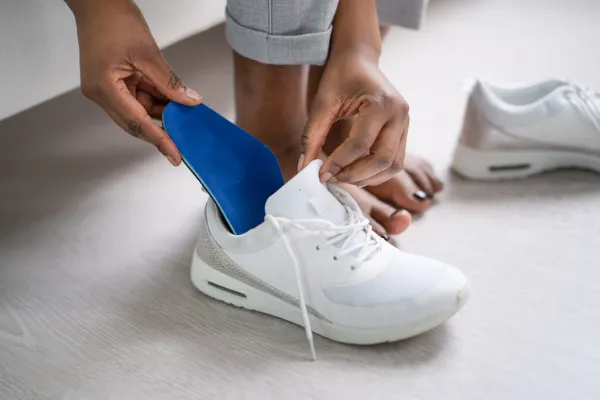
These are inserts worn inside shoes.
You may also hear them called:
Orthotic insoles
Foot orthoses
Shoe inserts
Arch supports
Prescription orthotics
Although these terms are sometimes used interchangeably, the products can differ considerably.
Some are simple cushioned insoles.
Others are designed to change pressure beneath particular areas of the foot.
And some are made specifically for an individual patient.
The important thing is what the device is intended to do, not how impressive its name sounds.
What's the Difference Between Custom Orthotics and Off-the-Shelf Insoles?
There are two main categories worth understanding.
Off-the-Shelf Insoles
These are ready-made inserts available in different sizes and designs.
You can buy them from pharmacies, sports shops and other retailers.
Some provide cushioning.
Others offer arch support or help redistribute pressure.
Certain models can be trimmed to fit your shoes.
They vary widely in quality, shape and firmness.
Custom Orthotics
Custom orthotics are made using information collected from an individual patient's feet.
This might involve:
Measurements
A mould or impression
A digital foot scan
Details from a clinical assessment
Specific design instructions
The finished device may include features intended to address particular needs.
However, custom-made doesn't automatically mean more effective.
A custom device can be well made and still be unsuitable for the problem you're trying to solve.
Equally, a ready-made insole can be inexpensive and still provide useful relief.
The right choice depends on the person, the diagnosis and the purpose of the device.
How Much Do Custom Orthotics Cost in the UK?
Prices vary considerably.
The cost depends on the provider, assessment process, materials, manufacturing method and whether follow-up adjustments are included.
As a broad guide, you might encounter prices such as:
Type of Insole or Orthotic | Illustrative UK Price Range |
|---|---|
Basic cushioned insoles | £5–£25 |
Supportive off-the-shelf insoles | £20–£70 |
Specialist or heat-moulded insoles | £40–£120 |
Custom-made foot orthotics | £150–£400+ |
These are approximate examples, not verified current prices or a Derriford Therapies price list. Actual charges vary between providers.
Some clinics charge separately for the initial assessment.
Others include assessment, fitting and follow-up appointments within a package.
More complex devices may cost more.
And if you need orthotics for different types of footwear, additional pairs may increase the overall cost.
Before buying custom orthotics, ask exactly what's included in the price.
That way, you're comparing the full service rather than just the cost of the inserts.
Why Are Custom Orthotics So Expensive?
It's easy to look at a pair of orthotics and wonder how two pieces of material can cost so much.
After all, they don't exactly look like complicated machinery.
But the price may cover more than the physical device.
Depending on the provider, it can include:
A detailed foot assessment
Examination of your symptoms
Analysis of walking or movement
Measurements or scanning
Design and manufacturing
Fitting
Adjustments
Follow-up appointments
Some devices are produced by specialist laboratories.
Others use different manufacturing systems.
The materials and complexity can also affect the price.
However, a high price doesn't guarantee a better result.
You're not simply paying for a piece of plastic or foam. You may also be paying for the assessment, design and professional service behind it.
The key question is whether that service and device are appropriate for your needs.
1. Are Custom Orthotics Better Than Ordinary Insoles?
Not necessarily.
This is probably the most important point in the entire article.
For some common foot conditions, research has not consistently shown that custom orthotics provide substantially better outcomes than suitable prefabricated devices.
For example, people with plantar heel pain may benefit from foot orthoses as part of a broader treatment plan.
But a custom-made device isn't automatically more effective than a well-chosen off-the-shelf option.
When Might Off-the-Shelf Insoles Be Enough?
Ready-made insoles may be suitable when:
Your needs are relatively straightforward.
You require general cushioning.
A standard shape fits your foot comfortably.
You have a condition where prefabricated support is appropriate.
You want to try a lower-cost option first.
When Might Custom Orthotics Be Worth Considering?
Custom devices may be useful when:
Standard insoles don't fit properly.
Your foot shape makes ready-made options unsuitable.
You need more specific pressure redistribution.
You have a complex foot condition.
A clinician identifies a particular reason for a customised design.
The best orthotic isn't necessarily the most expensive one. It's the one that suits your feet and your problem.
2. Can Custom Orthotics Help Plantar Fasciitis?
Plantar fasciitis, also called plantar fasciopathy, is a common cause of heel pain.
It affects the strong band of tissue running along the bottom of your foot.
You might notice:
Pain underneath your heel
Discomfort during your first steps in the morning
Pain after sitting
Symptoms after long periods of standing
Heel pain after exercise
Orthotics may help some people by changing pressure beneath the foot and improving comfort.
However, they aren't usually the only treatment worth considering.
A suitable management plan may also involve:
Adjusting painful activities
Appropriate strengthening exercises
Footwear advice
Gradually returning to exercise
Addressing other contributing factors
And here's something important.
Orthotics don't automatically cure plantar fasciitis.
They may help manage symptoms while the underlying problem is addressed.
For more information, read our related article:
Plantar Fasciitis in Plymouth: 7 Everyday Habits That Could Be Making It Worse
3. Do You Need Custom Orthotics for Flat Feet?
Not everyone with flat feet needs orthotics.
In fact, many people have naturally low arches and experience no pain whatsoever.
Flat feet aren't automatically a medical problem.
And having a low arch doesn't mean your feet are damaged or functioning incorrectly.
When Might Orthotics Help?
Orthotics may be considered if flat feet are associated with symptoms such as:
Persistent foot pain
Discomfort during walking
Certain tendon problems
Difficulty tolerating activities
Pressure-related foot problems
But treatment should be based on symptoms and assessment, not simply the appearance of your arches.
If your flat feet don't hurt and aren't causing problems, you may not need orthotics at all.
And buying expensive inserts purely because an online quiz says you have flat feet isn't necessarily money well spent.
4. Can Orthotics Help With Knee Pain?
Sometimes.
Your feet, ankles, knees and hips work together during movement.
Changing the support beneath your feet can influence how forces are distributed during walking or exercise.
For certain conditions, foot orthoses may be considered as part of treatment.
For example, some people with specific types of kneecap pain may benefit from prefabricated foot orthoses in the short term.
However, knee pain has many possible causes.
These include joint conditions, injuries, muscle problems and other factors.
Orthotics aren't a universal treatment for knee pain.
And they don't automatically correct your posture or realign your entire body.
If you're experiencing persistent knee pain, an appropriate assessment is important before spending money on inserts.
5. Can Orthotics Fix Your Foot Position?
This is where some marketing claims become a little misleading.
You may have seen advertisements suggesting orthotics can:
Correct every foot imbalance
Permanently realign your body
Fix your posture
Prevent all future injuries
Make you walk perfectly
Unfortunately, the human body isn't quite that simple.
Orthotics can influence pressure, movement and comfort.
But they don't necessarily change the permanent structure of your feet.
And there isn't one perfect foot position that everyone needs to achieve.
Your feet don't have to look a particular way to function comfortably.
The aim of treatment should be to address your symptoms and improve function, not to chase an imaginary perfect foot shape.
6. What Conditions Might Benefit From Custom Orthotics?
There are situations where custom-made devices may be particularly useful.
These can include selected cases involving:
Complex Foot Shapes
Some people have foot shapes that don't fit standard insoles comfortably.
A custom device may provide a better fit.
Significant Pressure Problems
People with painful areas underneath their feet may need specific pressure redistribution.
Certain Tendon Conditions
In selected cases, orthotics may form part of a wider treatment plan for tendon-related pain.
Arthritis
Some people with painful foot joints may benefit from changes in support or pressure.
High-Risk Foot Conditions
People with diabetes, neuropathy or previous foot ulcers may sometimes require specialist footwear and customised pressure-relieving devices.
These situations need proper clinical assessment.
Ordinary shop-bought insoles may be inappropriate for someone with a high-risk foot condition.
Custom orthotics can be valuable when there's a clear clinical reason for them.
But they should be prescribed or recommended based on individual needs.
7. Do Custom Orthotics Work for Everyone?
No.
And it's important to understand this before buying them.
Some people experience meaningful improvements in comfort.
Others notice only a small difference.
And some don't benefit at all.
There are several possible reasons.
For example:
The original diagnosis may be incorrect.
The orthotic design may not suit the problem.
The footwear may be unsuitable.
The device may need adjusting.
The condition may require additional treatment.
Orthotics may not be the right intervention.
Sometimes an orthotic can even cause new discomfort.
For example, a device that places pressure in the wrong area may create rubbing or pain.
If orthotics are making your symptoms worse, don't simply assume you need to keep wearing them until your feet surrender.
Contact the prescribing clinician for advice.
8. How Long Does It Take to Get Used to Orthotics?
Some people feel comfortable in orthotics almost immediately.
Others need time to adjust.
This can depend on the device, its design and how different it feels from your usual footwear.
A clinician may recommend gradually increasing the amount of time you wear new orthotics.
For example, you might start with shorter periods and build up as comfort allows.
However, the instructions should be specific to your device and medical needs.
What's Normal?
You may notice a different sensation beneath your feet.
But significant pain, rubbing, blisters or worsening symptoms aren't something to ignore.
Orthotics should help you move more comfortably, not create a completely new collection of foot problems.
If something doesn't feel right, ask for a review.
9. How Long Do Custom Orthotics Last?
The lifespan of an orthotic varies.
It depends on:
The materials used
How frequently it's worn
Your body weight
Your activity levels
The type of footwear
How the device is cared for
Some devices remain usable for several years.
Others may wear out sooner.
Soft cushioning materials can compress over time.
More rigid components may last longer but still need checking.
And even if the orthotic itself remains in good condition, your needs may change.
Don't assume that an orthotic you were prescribed years ago is automatically still the best option for your feet today.
If your symptoms or foot health have changed, a review may be appropriate.
10. Do You Have to Wear Orthotics Forever?
Not always.
Some people use orthotics temporarily while recovering from a painful condition.
Others benefit from longer-term support.
For example, someone with a complex foot shape or an ongoing pressure problem may need continued use.
But a person managing a temporary episode of heel pain may not need orthotics indefinitely.
The decision depends on the condition, the treatment goals and how symptoms respond.
Orthotics aren't automatically a lifelong commitment.
A good treatment plan should include a discussion about when and why they're needed.
11. Are Expensive Orthotics Worth It for Runners?
Runners often spend a considerable amount of money on footwear.
And orthotics can be another tempting purchase.
Especially when you're dealing with recurring foot discomfort.
But running injuries can have several causes.
These include:
Sudden increases in training
Changes in running distance
Previous injuries
Strength and recovery factors
Footwear issues
Tendon or joint conditions
Orthotics may help selected runners.
But they aren't guaranteed to prevent injury or improve running performance.
And a high price doesn't automatically mean better results.
If you're a runner with persistent foot pain, understanding the cause is more important than buying the most expensive insert available.
12. Should You Try Cheap Insoles Before Custom Orthotics?
For some people, this can be a sensible approach.
If your needs are straightforward and you don't have a high-risk foot condition, a suitable off-the-shelf insole may be worth considering.
However, it's important to choose something appropriate.
Not every insole suits every foot.
A very firm arch support may feel uncomfortable for some people.
A soft cushioned insole may not provide the pressure redistribution someone else needs.
And an insole that takes up too much space can make shoes tighter.
A Sensible Starting Point
Before buying anything, consider:
Where your foot hurts
What activities trigger the pain
Whether your footwear fits properly
Whether you've received a diagnosis
Whether the proposed insole has a clear purpose
If you're unsure what you're treating, buying multiple pairs of insoles can become an expensive guessing game.
Sometimes an assessment saves money by helping you avoid unsuitable products.
13. What Questions Should You Ask Before Buying Custom Orthotics?
If a clinician recommends custom orthotics, you should feel comfortable asking questions.
Here are seven worth considering.
1. What Condition Are We Treating?
You should understand the diagnosis or the reason the device is being recommended.
2. Why Do I Need Custom Orthotics?
Ask what makes a custom device more suitable than a ready-made option.
3. What Improvement Should I Expect?
Will the orthotics aim to reduce pain, redistribute pressure or improve comfort during activity?
4. What Evidence Supports Their Use for My Condition?
It's reasonable to ask about the likely benefits and limitations.
5. Are There Other Treatment Options?
Could footwear changes, exercises or other care be appropriate?
6. What's Included in the Price?
Ask about assessment, fitting, follow-ups, adjustments and replacement policies.
7. What Happens if They Don't Help?
Find out whether the device can be adjusted and when your symptoms should be reviewed.
A good healthcare professional should be happy to explain why a treatment is being recommended.
You shouldn't feel pressured into buying something you don't understand.
14. Are Foot Scans Enough to Tell You That You Need Orthotics?
Digital foot scans can provide useful information.
They may help capture foot shape or pressure patterns.
But a scan alone doesn't tell the whole story.
For example, someone might have low arches on a scan but experience no pain.
Another person might have relatively ordinary-looking feet but struggle with a painful tendon condition.
A scan doesn't automatically explain the cause of symptoms.
And it shouldn't replace a proper clinical assessment.
A colourful computer image of your feet isn't, by itself, proof that you need expensive orthotics.
The findings need to be interpreted alongside your symptoms, medical history and examination.
15. What Are the Warning Signs of Unnecessary Orthotic Sales?
Most healthcare professionals want to provide appropriate care.
But it's still sensible to be cautious about exaggerated claims.
Be wary if someone tells you:
Everyone needs custom orthotics.
Your feet are abnormal simply because you have low arches.
Orthotics will permanently correct your entire body.
Expensive devices are always better.
A foot scan alone proves you need treatment.
Orthotics will cure every type of foot, knee or back pain.
You must buy immediately to avoid serious future problems.
Orthotics can be helpful, but they aren't magic.
And they shouldn't be sold as though they are.
16. When Should You See a Podiatrist Before Buying Orthotics?
Consider seeking professional advice if:
You have recurring heel pain.
Your arches hurt when walking.
You're experiencing persistent ankle discomfort.
You have painful pressure areas underneath your feet.
You're unsure whether your flat feet need treatment.
You've tried insoles without improvement.
You're considering spending a significant amount on custom orthotics.
Foot pain is affecting work, exercise or everyday activities.
If you have diabetes, reduced sensation, poor circulation or a history of foot ulcers, seek professional advice before using new orthotics or pressure-relieving insoles.
And if you experience sudden severe pain, significant swelling or an inability to bear weight, seek prompt medical assessment rather than trying to solve the problem with inserts.
How Can Derriford Therapies Help You Decide Whether Orthotics Are Worth It?
At Derriford Therapies, we believe that foot care should be based on what patients actually need.
Not simply on the most expensive treatment available.
Our HCPC-registered podiatrists can discuss your symptoms, assess your foot health and help you understand what may be contributing to your discomfort.
We'll want to know:
Where your feet hurt
How long you've had symptoms
Which activities make the pain worse
What footwear you usually wear
Whether you've tried insoles before
Whether you have any relevant medical conditions
How your symptoms affect everyday life
Depending on your needs, we can discuss practical foot care, footwear considerations and whether orthotic support or further specialist assessment may be appropriate.
If you require a particular type of orthotic device or specialist service, we'll explain appropriate next steps and referral options where needed.
Our priority is helping you make an informed decision about your foot health.
Because sometimes a simple change makes a meaningful difference.
And sometimes a more specialised treatment is worth considering.
The important thing is choosing the right option for the right reason.
Why Choose Derriford Therapies?
We're a friendly, approachable podiatry clinic based in Plymouth, helping patients look after their feet since 2022.
Led by Clinical Director Chelsea Louise Tritschler, our HCPC-registered team believes in professional care, practical advice and making patients feel comfortable.
Our clinic offers:
Bright, modern treatment rooms
Ground-floor access with a disabled access ramp
Convenient free parking nearby
Simple online booking
Friendly reception support
Appointments tailored to your individual needs
Whether you're dealing with heel pain, tired arches or another foot health concern, we're here to help you understand your options.
And don't worry if you've already got a drawer full of abandoned insoles.
You're certainly not the first person to discover that buying something labelled "maximum comfort" doesn't guarantee your feet will agree!
So, Are Expensive Custom Orthotics Worth It?
Sometimes, absolutely.
But not for everyone.
Custom orthotics can be valuable when they're designed to address a specific problem and there's a clear reason why a personalised device is needed.
However, they're not automatically better than off-the-shelf insoles.
And they aren't a guaranteed cure for foot pain.
The real question isn't whether custom orthotics are expensive. It's whether they're appropriate for your condition and likely to provide enough benefit to justify the cost.
Before spending money, make sure you understand:
What's causing your symptoms
Why orthotics are being recommended
Whether a ready-made option could help
What results you can realistically expect
What other treatments may be needed
What's included in the price
If you're unsure whether orthotics are right for you, professional advice can help you make a more informed decision.
At Derriford Therapies in Plymouth, our friendly team is here to discuss your foot health and help you understand appropriate next steps.
Book a podiatry appointment online or give our reception team a call if foot pain is affecting your comfort and you're wondering whether orthotics might help.
Because looking after your feet shouldn't involve spending hundreds of pounds on guesswork.
And sometimes, the best investment is simply finding out what's actually causing the problem.
Derriford Therapies — helping Plymouth put its best foot forward.