
Why Does the Ball of My Foot Hurt When I Walk?
Does every step feel as though you're walking on a pebble?
Perhaps there's a burning or aching pain just behind your toes. Maybe the ball of your foot only hurts after a long walk, or perhaps you've started noticing it every time you stand up.
Pain in the ball of the foot is common, but that doesn't mean you should simply put up with it.
There are several possible causes, from footwear and pressure to problems affecting the joints, nerves or skin.
Let's look at what might be happening — and what you can do about it.
Where exactly is the ball of your foot?
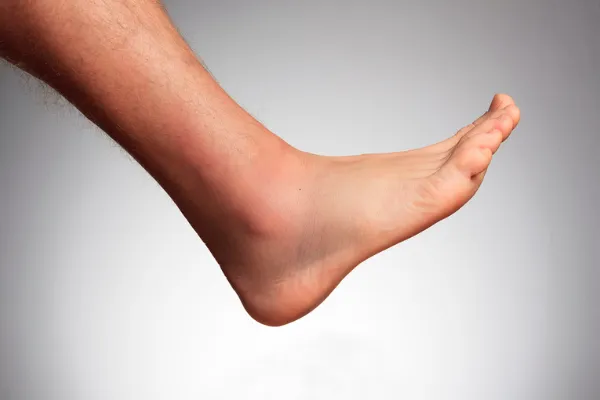
The ball of your foot is the padded area just behind your toes.
Underneath this area are the heads of your metatarsal bones — the long bones running through the middle of your foot.
When you walk, your body weight moves forwards through your foot and across this area before you push off through your toes.
That's a lot of work for a relatively small part of your foot.
If pressure isn't being distributed comfortably, the area can become sore.
Pain around the ball of the foot is sometimes called metatarsalgia. This simply means pain affecting the metatarsal area rather than describing one specific condition.
So what's causing it?
1. Your shoes could be putting too much pressure on your feet
Let's start with one of the more obvious suspects.
Shoes can have a big effect on the amount of pressure placed through the front of your feet.
Shoes that are too narrow can squeeze your toes together. High heels shift more of your body weight towards the front of the foot. Shoes with very thin or poorly cushioned soles may also leave the area feeling uncomfortable.
Even your trusty old shoes can become a problem once the cushioning has worn down.
Take a look at what you're wearing most days.
Your toes should have enough room to move comfortably, and your footwear shouldn't pinch or rub.
If removing your shoes at the end of the day feels like the best part of your evening, they may deserve a closer inspection.
2. You're spending more time on your feet
Have you recently increased your walking?
Started running?
Changed jobs?
Or perhaps you've simply had a particularly busy few weeks.
Increasing the amount of time you spend standing, walking or exercising also increases the work your feet need to do.
Sometimes your feet adapt without complaint.
Sometimes they send you a strongly worded message.
Pain around the ball of the foot can develop when the area is repeatedly exposed to more pressure than it's currently comfortable handling.
If you've recently increased your activity, consider whether this happened gradually or all at once.
3. Hard skin or a corn may be causing the pain
Sometimes the source of ball-of-foot pain is closer to the surface.
Areas exposed to repeated pressure or friction can develop hard skin, also called callus.
A small concentrated area of hard skin can form a corn.
Corns can become surprisingly painful, particularly when they're directly underneath a part of the foot that takes lots of pressure.
People often describe the sensation as feeling like there's a stone or tiny object inside their shoe.
Trying to cut a corn out yourself isn't recommended. It's very easy to damage the healthy skin around it, particularly if you're using sharp tools.
A podiatrist can assess the area, safely treat the hard skin or corn where appropriate and, importantly, look at why it developed in that particular place.
4. Your foot shape can affect where pressure goes
No two pairs of feet are exactly alike.
The shape of your foot, position of your toes and way your foot moves can all influence where pressure is concentrated when you walk.
For example, certain foot shapes or toe positions may mean one area underneath the forefoot deals with more pressure than its neighbours.
That doesn't necessarily mean there's anything “wrong” with your feet.
But if a particular area is repeatedly overloaded, discomfort can develop.
A podiatry assessment can help identify these patterns rather than simply treating the painful spot.
5. A bunion may be changing how you walk
A bunion is the bony bump that develops around the joint at the base of the big toe.
As a bunion progresses, it can change the position of the big toe and affect the way pressure travels through the front of the foot.
Some people then experience pain underneath other areas of the forefoot.
You might also notice:
Redness or soreness around the big toe joint
Difficulty finding comfortable shoes
Hard skin underneath the foot
Pain when walking longer distances
Changes in the position of your toes
If you have a bunion as well as pain in the ball of your foot, the two may be connected.
6. It could be nerve irritation
Burning, tingling, shooting pain or the sensation that something is stuck inside your shoe can sometimes be related to an irritated nerve.
One possible cause is Morton's neuroma, where a nerve between the toes becomes irritated or thickened.
People often describe unusual sensations around the ball of the foot or into the toes.
Tight footwear can sometimes aggravate the symptoms.
Because several foot problems can produce similar discomfort, it's worth having symptoms properly assessed rather than assuming you have a particular condition.
7. A joint could be irritated
There are several small joints around the front of your foot.
Like any other joints in the body, they can become painful.
Pain may be associated with overuse, injury, changes in foot movement or conditions such as arthritis.
You may notice swelling, stiffness or discomfort when bending your toes.
If the pain is getting worse or affecting your walking, an assessment can help establish which structure is causing the problem.
What can I do about pain in the ball of my foot?
If the discomfort is mild and has only recently started, begin with a few simple changes.
Check your footwear. Make sure your shoes aren't squeezing your toes and have appropriate cushioning and support.
Review your activity. If you've suddenly increased your walking or exercise, temporarily reducing the activities that aggravate the area may help.
Don't cut hard skin yourself. If you suspect a corn or painful callus, let a podiatrist take a look.
Pay attention to patterns. Does it hurt in particular shoes? After a certain distance? When barefoot? Is it burning, aching or sharp?
Those details can be useful when assessing what's happening.
And try not to keep walking through significant pain simply because you have things to do.
Your feet don't know how busy your diary is.
When should I see a podiatrist?
Consider getting professional advice if your ball-of-foot pain:
Keeps returning
Is becoming more painful
Has lasted for several weeks
Is affecting the way you walk
Stops you exercising or doing normal activities
Is accompanied by persistent swelling
Includes burning, tingling or unusual sensations
Is associated with painful corns or hard skin
If you experience sudden severe pain, significant swelling, cannot put weight on the foot, or the pain followed an injury, seek appropriate medical assessment promptly.
People with diabetes, poor circulation or reduced sensation in their feet should also be particularly careful about new foot problems and seek professional advice rather than attempting to treat them themselves.
How can a podiatrist help with ball-of-foot pain?
At Derriford Therapies in Plymouth, our HCPC-registered podiatrists can assess your foot to help determine what's causing the discomfort.
We'll look beyond the painful area itself.
Depending on your symptoms, we may consider your footwear, foot shape, skin, joints and how pressure is being distributed when you stand and walk.
Treatment will depend on what we find and may include:
Footwear advice
Treatment of painful corns or hard skin
Advice about managing activity
Padding or pressure relief
Exercises where appropriate
Assessment of your foot and lower-limb movement
Orthotic therapy where appropriate
Orthotics are supportive inserts worn inside footwear. In some cases, they can help redistribute pressure away from uncomfortable areas.
They're not needed for every painful foot, which is why assessment comes first.
Don't get used to walking with painful feet
When foot pain develops gradually, it's surprisingly easy to adapt.
You start choosing shorter walks.
You avoid particular shoes.
You shift your weight onto the other foot.
You decide that aching feet are simply what happens after a busy day.
But pain in the ball of your foot is worth listening to, particularly if it keeps returning.
Finding out why it hurts is usually more useful than simply trying to put up with it.
Looking for help with foot pain in Plymouth?
At Derriford Therapies, our friendly HCPC-registered podiatrists can assess your foot pain, explain what may be causing it in straightforward language and recommend treatment based on your individual needs.
Our bright, modern Plymouth clinic has ground-floor access, easy parking and a friendly reception team ready to help.
Your feet have enough work to do without every step hurting.
If pain in the ball of your foot is making walking uncomfortable, book a podiatry appointment online or give our reception team a call.