
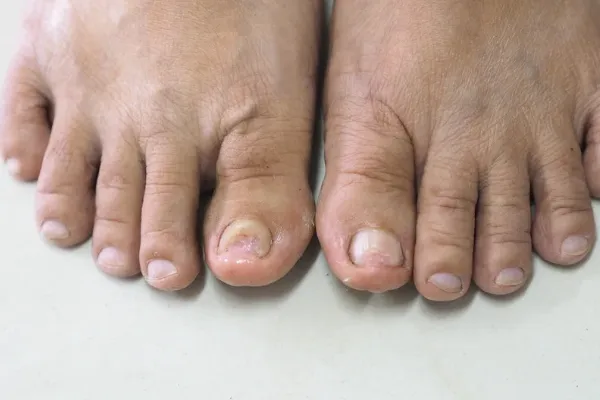
Fungal Nail Treatment in Plymouth: Why Fungal Toenails Can Be So Stubborn
You've bought the treatment.
You've carefully applied it.
You've waited.
And waited.
Yet that thick, discoloured toenail seems completely unimpressed by your efforts.
Fungal toenail infections have a reputation for being stubborn, and unfortunately, they've earned it.
They can take time to treat, healthy toenails grow slowly, and sometimes the problem being treated isn't actually fungal in the first place.
So, why can fungal nails be so difficult to clear?
Let's take a closer look.
What is a fungal nail infection?
A fungal nail infection happens when certain types of fungi infect the nail.
You may also hear the medical term onychomycosis, which simply means a fungal infection of the nail.
Toenails are particularly vulnerable because fungi tend to like warm, moist environments.
A fungal toenail may gradually become:
Yellow, white or brown
Thicker than usual
Brittle or crumbly
Uneven or distorted
Difficult to cut
Partially lifted away from the skin underneath
The infection may begin around one part of the nail before gradually spreading.
However, there's something very important to remember.
A funny-looking toenail isn't always fungal
This is one of the biggest reasons people can spend months applying fungal nail treatments without seeing much improvement.
Not every thick, yellow or damaged toenail has a fungal infection.
Toenails can change appearance because of:
Previous injury
Repeated pressure from footwear
Certain skin conditions
Age-related nail changes
Damage to the area where the nail grows
Other nail conditions
Some of these can look surprisingly similar to a fungal nail infection.
So if you've been treating a nail for fungus and nothing is changing, the question shouldn't always be:
“Which stronger product should I try next?”
Sometimes the better question is:
“Is this actually fungal?”
A podiatry assessment can help determine the most appropriate next step.
Why are fungal toenails so stubborn?
There isn't one single reason.
Usually, it's a combination of the infection itself, the structure of the nail and the fact that toenails grow rather slowly.
Here are some of the main challenges.
1. Toenails grow very slowly
This is perhaps the least exciting but most important part of fungal nail treatment.
Healthy toenail growth takes time.
Even when treatment is working, the damaged part of the nail doesn't instantly transform into a beautiful clear nail.
Instead, healthier-looking nail needs to grow forwards from the base.
Big toenails in particular can take many months to fully grow out.
That means successful treatment requires patience.
You may need to look at what's happening near the base of the nail rather than expecting the whole nail to suddenly change.
Fungal nail treatment is definitely more marathon than sprint.
2. The fungus can be difficult to reach
A toenail is designed to be tough.
That's useful when it's protecting the end of your toe.
Less useful when you're trying to get a treatment through it.
If the nail is very thick, some topical treatments applied to the surface may struggle to reach the affected areas effectively.
This is one reason professional nail care may form part of a treatment plan.
Where appropriate, a podiatrist can reduce excessive nail thickness, making the nail easier to manage and potentially helping certain treatments reach the affected area.
3. Treatment may be stopped too soon
You've been applying something for a few weeks.
The nail still looks fungal.
You decide it hasn't worked.
Into the bathroom cupboard it goes, where it joins seven half-used tubes of things you've forgotten buying.
Sound familiar?
Because nails grow slowly, visible improvement can take time.
Stopping treatment too early may mean the infection hasn't had enough time to respond.
It's important to follow the recommended treatment plan and understand how long results may realistically take.
4. Athlete's foot may also be present
Fungal infections don't always politely stay in one place.
Athlete's foot is a fungal infection affecting the skin, often around or between the toes.
If you have fungal skin symptoms as well as a fungal nail infection, treating only the nail may leave another source of fungus nearby.
Signs of athlete's foot can include:
Itchy skin
Flaking or scaling
Soreness between the toes
Cracked skin
Areas of redness
Managing the skin and nail appropriately can therefore be an important part of reducing the chance of ongoing problems.
5. Your shoes and socks can create a fungus-friendly environment
Fungi enjoy warm and damp conditions.
Unfortunately, feet spend a considerable amount of time inside shoes.
If your feet sweat heavily or your footwear doesn't dry properly between uses, you may be creating exactly the sort of environment fungi prefer.
Simple habits can help.
Where practical:
Change socks regularly
Allow shoes to dry properly
Rotate footwear rather than wearing the same pair every day
Dry carefully between your toes after washing
Choose breathable footwear where appropriate
You don't need to become obsessed with sterilising everything your feet have ever touched.
But keeping feet and footwear reasonably dry is sensible.
6. Repeated nail damage may be contributing
A nail that's repeatedly being damaged can become thickened and distorted.
That can make it harder to tell whether changes are due to fungal infection, trauma or both.
Check your footwear.
Are your toes touching the front?
Do your toenails repeatedly become bruised after walking or exercise?
Is one particular toe constantly rubbing against the shoe?
If the nail keeps being traumatised while you're trying to improve its health, progress may be frustratingly slow.
7. Reinfection can happen
Even if a fungal infection improves, it doesn't mean you're permanently protected.
Fungal infections can return.
Good foot hygiene and sensible footwear habits remain important after treatment.
Try not to share footwear, socks, nail clippers or towels.
If you use communal changing areas or showers, wearing appropriate footwear can also reduce direct contact with shared floors.
Can I treat a fungal toenail at home?
There are pharmacy treatments available for fungal nail infections, and some people may choose to try these for mild cases.
The important thing is to follow the instructions carefully and consistently.
Avoid assuming that using more product than recommended will make the infection disappear faster.
It won't necessarily help and may irritate the surrounding skin.
And avoid attempting to cut away large sections of affected nail yourself.
If the nail is very thick, difficult to cut, painful or you're unsure whether the problem is fungal, professional advice is sensible.
Should I file down a fungal nail?
Reducing a thickened nail can sometimes form part of professional fungal nail care.
However, aggressive DIY filing can damage the surrounding skin or nail.
There's also a hygiene issue.
If you're filing a nail that contains fungal material, don't use the same file on healthy nails.
If your nail has become particularly thick or difficult to manage, a podiatrist can safely reduce it where appropriate.
What about nail polish?
It can be tempting to cover a discoloured toenail, especially during sandal season.
However, repeatedly covering the nail doesn't address the underlying cause.
Certain treatments may also have specific instructions regarding nail polish or cosmetic products.
If you're undergoing treatment, follow the advice provided with your particular treatment plan.
When should I see a podiatrist about a fungal nail?
Consider getting professional advice if:
You're unsure whether the nail is actually fungal
The nail has become very thick
It's difficult to cut safely
The nail is painful
Several nails are affected
The nail is lifting or crumbling
Home treatment hasn't helped
The surrounding skin is also affected
The problem keeps returning
People with diabetes, poor circulation or reduced sensation in their feet should be particularly cautious about treating nail problems themselves and seek appropriate professional advice.
If the skin around a nail becomes increasingly red, hot, swollen, painful or starts producing discharge, seek medical advice as these can be signs of infection requiring assessment.
How can a podiatrist help with fungal toenails?
At Derriford Therapies in Plymouth, our HCPC-registered podiatrists can assess your toenails and discuss what's most likely to be causing the changes.
That's important because we don't want you spending months treating a fungal infection you may not actually have.
Depending on what we find, your care may include:
Assessment of the affected nails
Professional reduction of thickened nails where appropriate
Advice on suitable fungal nail treatments
Foot and footwear hygiene advice
Management of associated skin problems
Ongoing professional nail care
We'll also explain what you can realistically expect from treatment.
Unfortunately, we don't have a magic button that makes a damaged toenail look perfect by Tuesday.
Healthy nail growth takes time.
But having the right plan from the beginning can save a great deal of frustration.
What happens to the damaged part of the nail?
This is an important point when judging whether fungal nail treatment is working.
The existing damaged nail may continue to look damaged.
What you're hoping to see is healthier nail gradually growing through.
As it grows, the older affected nail moves forwards and can eventually be trimmed away.
Because toenails grow slowly, this process can take months.
Taking occasional photographs can sometimes help you notice gradual changes that are difficult to see when you're looking at the nail every day.
Can fungal toenails come back after treatment?
Yes, reinfection is possible.
That's why prevention matters alongside treatment.
Once your nails improve, continue looking after your feet.
Keep them clean and dry, pay attention to athlete's foot symptoms, avoid sharing nail equipment and give footwear enough time to dry.
If you're prone to sweaty feet, discussing ways to manage excess moisture may also be helpful.
Don't let embarrassment stop you getting help
Fungal nails are common.
Really common.
Yet many people feel embarrassed about showing them to somebody.
Please don't.
As podiatrists, we spend our working days looking at feet.
Thick nails, crumbly nails, yellow nails and nails that have been hidden inside socks for several years aren't going to shock us.
What matters is working out what's happening and what can be done.
The longer you spend hiding the problem, the longer you're left worrying about it.
Looking for fungal nail treatment in Plymouth?
At Derriford Therapies, our friendly HCPC-registered podiatrists can assess thickened, discoloured or damaged toenails and discuss appropriate treatment options.
We'll help you understand whether your nail changes are consistent with a fungal infection, what may be contributing to the problem and what you can do to improve the health of your feet and nails.
Our bright, modern Plymouth clinic offers ground-floor access, easy parking and a friendly reception team ready to help.
Fungal toenails can be stubborn, but you don't have to keep guessing what to do next.
Book a podiatry appointment online or give our reception team a call to have your nails professionally assessed.