
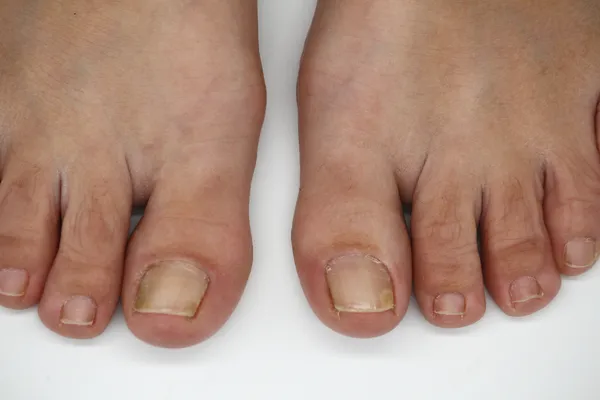
Fungal Nails in Plymouth: Is That Thick Yellow Toenail Really a Fungal Infection?
You take your socks off, look down and notice one of your toenails has changed.
It's thicker than it used to be.
It's looking a little yellow.
Perhaps it's becoming crumbly around the edge too.
The obvious conclusion might be:
“I've got a fungal nail infection.”
And you might be right.
But here's the important bit: not every thick, yellow or damaged toenail is fungal.
At Derriford Therapies in Plymouth, we see plenty of toenails that have changed colour, shape or thickness. Sometimes fungus is the likely culprit. Sometimes there is another explanation entirely.
Before spending months treating something as a fungal infection, it makes sense to understand what might actually be happening.
What is a fungal nail infection?
A fungal nail infection happens when certain types of fungi infect the nail.
You may hear a healthcare professional call it onychomycosis. That's simply the medical name for a fungal nail infection.
Toenails are commonly affected, and the infection can involve one or several nails.
Changes may happen slowly, which means you might not notice anything unusual at first.
Over time, however, the difference can become much more obvious.
What does a fungal toenail look like?
There isn't one single appearance that proves a toenail has a fungal infection.
Possible signs can include:
Yellow, white or brown discolouration
Thickening of the nail
A brittle or crumbly texture
Changes in the shape of the nail
Debris underneath the nail
Part of the nail lifting away from the skin underneath
Difficulty cutting the nail
Discomfort or pressure inside footwear
You may have several of these symptoms or only one.
And this is where things become slightly complicated.
Other nail problems can produce some very similar changes.
So, a yellow toenail isn't always fungal?
Exactly.
It's easy to see a yellow, thickened nail and immediately blame fungus.
Unfortunately, toenails aren't quite that cooperative when it comes to diagnosis.
A nail can become thick, damaged or discoloured for several reasons.
That's why appearance alone doesn't always give you the complete answer.
What else can cause a thick or yellow toenail?
1. Repeated pressure from your shoes
Your footwear can have a surprisingly big effect on your toenails.
If your shoes are too short or don't provide enough room around your toes, your nails can repeatedly hit or rub against the inside of the shoe.
You might barely notice it happening.
But thousands of steps later, that repeated pressure can damage the nail.
The result can be a nail that becomes:
Thicker
Discoloured
Misshapen
Ridged
Difficult to cut
This can sometimes look remarkably similar to a fungal infection.
2. An old injury
Toenails have very good memories.
You may have dropped something on your toe, stubbed it badly or damaged the nail during sport months or even years ago.
The nail-producing area can sometimes be affected by an injury, changing the way the nail grows afterwards.
You might have forgotten all about the original incident.
Your toenail, apparently, has not.
3. Regular sporting activity
Running, hiking and other activities can repeatedly push your toes against your footwear.
This is especially likely if your shoes don't fit correctly or your feet move forwards inside them.
Over time, the repeated impact can change the appearance of a toenail.
Again, that doesn't automatically mean fungus is responsible.
4. Skin conditions
Some skin conditions can affect the nails as well as the skin.
They may cause changes in colour, thickness, texture or shape that could potentially be mistaken for a fungal infection.
If you already have an ongoing skin condition and notice changes to your nails, it's worth mentioning this during your assessment.
5. Changes as we get older
Toenails can naturally change over time.
They may become thicker, harder or more difficult to manage.
That doesn't mean every thickened nail in an older person is simply due to age – and it certainly doesn't mean it should be ignored if something has changed unexpectedly.
But ageing can be one of several factors affecting how our toenails look and grow.
What about athlete's foot?
Fungal nail infections and athlete's foot can occur together.
Athlete's foot is a fungal infection affecting the skin.
You might notice:
Itching
Flaky or peeling skin
Cracking
Soreness
Changes between the toes
If you have changes to your toenails as well as itchy or peeling skin around your feet, mention both when speaking to your podiatrist.
Treating your feet means looking at the whole picture rather than concentrating on one yellow toenail.
Why does getting the diagnosis right matter?
Imagine spending six months applying fungal nail treatment to a nail that isn't fungal.
That's six months of treatment, expense and frustration without addressing the real problem.
On the other hand, if you do have a fungal nail infection, understanding what's happening can help you make informed decisions about treatment.
The aim shouldn't be to guess. It should be to understand what you're treating.
A podiatrist can assess the nail and discuss whether its appearance is consistent with a fungal infection or whether another cause should be considered.
Where appropriate, further testing may sometimes be advised to help confirm what is happening.
Why are fungal nails so difficult to treat?
Even when a fungal infection is correctly identified, treatment can take time.
One major reason is wonderfully simple:
Toenails grow slowly.
Treatment doesn't usually turn the existing damaged nail instantly clear and healthy.
Instead, you're generally waiting for healthier-looking nail to grow through from the base while the older affected nail gradually grows forwards.
That process can take many months.
So if you've started treatment and are checking your toenail every morning hoping for a dramatic overnight transformation, you may be disappointed.
Toenails are not known for rushing.
Can I treat a suspected fungal nail myself?
Some fungal nail treatments are available from pharmacies.
However, before starting treatment, it's worth considering whether you're confident that the nail problem is actually fungal.
If you're unsure, ask a pharmacist, podiatrist or another appropriate healthcare professional.
You should be particularly careful about attempting home treatment if you have a condition that puts your feet at greater risk.
And please avoid aggressively cutting, scraping or drilling a thickened nail yourself.
Damaging the surrounding skin can create an entirely new problem.
What treatments are available for fungal nails?
Treatment depends on the individual.
Options may include treatments applied directly to the nail. In some circumstances, oral antifungal medicines – tablets taken by mouth – may be considered following an appropriate medical assessment.
These medicines aren't suitable for everybody and can interact with other medicines or require additional medical consideration.
That's why treatment needs to be chosen appropriately rather than using a one-size-fits-all approach.
A podiatrist may also be able to carefully reduce a thickened nail where appropriate. This can make it easier to manage and may reduce pressure or discomfort inside footwear.
What can I do to look after my feet?
Whether you're currently dealing with a fungal infection or trying to reduce your chances of future problems, good everyday foot habits can help.
Try to:
Wash and dry your feet carefully
Pay particular attention when drying between your toes
Change socks regularly
Give footwear time to dry between uses
Rotate your shoes when possible
Wear footwear that gives your toes enough room
Avoid sharing nail clippers and foot files
Avoid sharing socks or footwear
Follow sensible foot hygiene in communal changing and shower areas
Keep nail-care equipment clean
These steps can't guarantee you'll never develop a fungal infection, but they're sensible habits for general foot health.
Should I throw away all my shoes?
Usually, there's no need for an emotional farewell ceremony involving your entire shoe cupboard.
Good footwear hygiene is useful, particularly if your feet tend to become hot or sweaty.
Allowing shoes to dry thoroughly and rotating between pairs can help.
If you're receiving treatment for a fungal infection, your podiatrist can give you advice based on your individual circumstances.
When should I get a thick or yellow toenail checked?
Consider arranging a professional assessment if:
You're unsure whether the nail is fungal
The nail has changed significantly in colour or shape
It has become very thick
You can no longer cut it comfortably
The nail is painful
It is lifting away from the skin underneath
Several nails are becoming affected
You've tried fungal treatment without improvement
The surrounding skin is red, swollen or painful
You're simply concerned about the change
You don't need to wait until the nail becomes extremely uncomfortable.
If something has changed and you're unsure why, it's reasonable to ask.
Be particularly careful if you have higher-risk feet
Some people need to take extra care with any foot or nail problem.
If you have diabetes, reduced sensation in your feet, circulation problems or another medical condition that increases your risk of foot complications, seek professional advice before attempting to cut, file or treat a troublesome nail yourself.
Small injuries can sometimes become more significant when sensation or circulation is reduced.
How Derriford Therapies can help with fungal nails in Plymouth
At Derriford Therapies in Plymouth, our HCPC-registered podiatrists can assess thickened, damaged or discoloured toenails.
We'll look at the nail itself, but we'll also consider what else may be contributing.
That could include your footwear, previous injuries, pressure on the toes, changes to the surrounding skin and any treatments you've already tried.
If the nail is particularly thick or difficult to manage, we can discuss whether professional nail care may help.
And if further investigation or advice from another healthcare professional would be appropriate, we'll explain that too.
Our aim is simple:
Find out what's likely to be happening before deciding what to do about it.
Don't be embarrassed by your toenails
This deserves its own section because so many people apologise before taking their socks off.
Please don't.
We are podiatrists.
Thick nails, yellow nails, damaged nails, crumbly nails and nails that seem to have developed their own personality are all part of our working day.
There's no judgement.
If you've been hiding your feet because you're embarrassed about how a toenail looks, getting it assessed may give you some much-needed clarity.
That yellow nail deserves more than a guess
A thick, yellow toenail could be a fungal infection.
But it could also be the result of pressure, injury or another nail problem.
That's why endlessly buying fungal treatments without knowing what you're treating isn't always the best plan.
If you're worried about a thick, yellow or suspected fungal nail in Plymouth, our friendly team at Derriford Therapies can assess your feet and talk you through the appropriate next steps.
You don't need to diagnose your toenails using internet photographs.
We've spent rather a lot more time looking at feet than Google Images has spent looking at yours.
Book your podiatry appointment online or give our friendly reception team a call.
Important Medical Disclaimer
The information in this blog is provided for general education and information only. It should not be used as a substitute for individual medical advice, diagnosis or treatment from a qualified healthcare professional.
Nail changes can have different causes, and it isn't always possible to identify the cause from appearance alone.
If you are concerned about a change to your toenails or feet, please seek advice from a podiatrist, general practitioner, pharmacist or another appropriate healthcare professional.
Seek prompt medical advice if you develop significant pain, redness, swelling, discharge, signs of infection or another sudden or worrying change.