
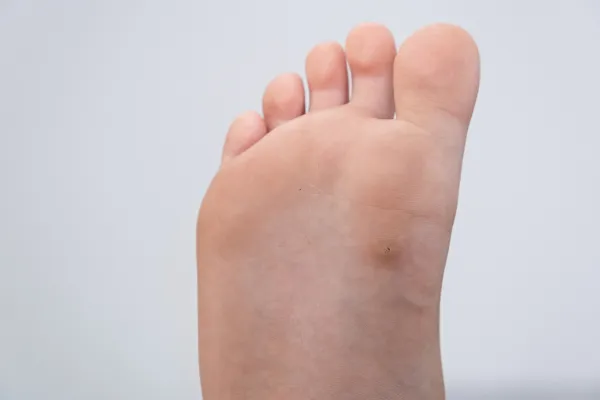
Verruca Treatment in Plymouth: When Should You Get a Verruca Checked?
Verruca Treatment in Plymouth: When Should You Get a Verruca Checked?
You've spotted a small, rough patch on the bottom of your foot.
At first, you ignore it.
Then you start wondering whether it's a bit of hard skin. A corn, perhaps? And after a little too much internet searching, you've diagnosed yourself with approximately seven different foot conditions.
It could be a verruca.
Verrucas are common and many eventually clear without treatment. But if a verruca is painful, spreading, persistent or you're not actually sure what you're looking at, it's worth getting professional advice.
At Derriford Therapies in Plymouth, our HCPC-registered podiatrists can assess suspicious areas on the feet and help you understand what to do next.
What is a verruca?
A verruca is a wart that develops on the foot, usually on the sole.
It's caused by certain types of the human papillomavirus, usually shortened to HPV.
The virus can enter through tiny breaks in the skin and cause a small area of thickened, rough-looking tissue.
Because verrucas are often on weight-bearing areas of the foot, standing and walking can push them inwards. This can make them look and feel different from warts found elsewhere on the body.
What does a verruca look like?
A verruca can vary in appearance, but you might notice:
A rough or grainy area of skin
An area surrounded by hard skin
Tiny dark dots within the lesion
A change in the normal lines of the skin
Tenderness when standing or walking
Several small verrucas grouped together
Those tiny dark dots are sometimes described as the "roots" of a verruca.
They're not roots.
They're usually tiny blood vessels within the affected tissue.
So no, your verruca isn't secretly growing roots into your foot – which is hopefully one less unpleasant thought to have today.
Is it definitely a verruca?
This is where things can get tricky.
A verruca can sometimes look similar to a corn, callus or another skin lesion.
Corns are generally caused by repeated pressure or friction. Verrucas are caused by a viral infection.
Although they can look similar, they aren't treated in exactly the same way.
If you've been applying verruca treatment for weeks without being completely sure it's a verruca, having the area assessed could save you quite a bit of frustration.
Do all verrucas need treatment?
No.
In many healthy people, verrucas can eventually disappear as the immune system deals with the virus.
The problem is that "eventually" can sometimes feel like a very long time.
Some verrucas cause no discomfort and can simply be monitored.
Others become painful, spread or start interfering with normal activities.
Whether treatment is appropriate depends on the individual verruca and the person attached to the foot.
1. Get it checked if you're not sure it's a verruca
If you're looking at something on your foot and thinking, "Is that actually a verruca?", that's a perfectly good reason to ask a podiatrist.
It can be difficult to tell the difference between verrucas, corns and areas of hard skin at home.
A podiatrist can examine the area and advise you on what it is likely to be.
And if something doesn't look typical of a verruca, we can advise you on the appropriate next step.
2. Get it checked if it's painful
Some verrucas are completely painless.
Others can feel as though you're walking on a small stone every time you take a step.
Pain is particularly common when a verruca develops on an area that takes a lot of pressure, such as the heel or ball of the foot.
You may unconsciously change the way you walk to avoid putting pressure on it.
If that starts happening, it's worth having the area assessed.
Your verruca may be tiny, but it shouldn't be allowed to reorganise the way you walk.
3. Get it checked if it appears to be spreading
Verrucas can spread.
You might start with one small lesion and later notice several areas nearby.
A group of verrucas growing close together is sometimes called a mosaic verruca.
You can also potentially spread the virus to other people or other areas of your own skin.
Try not to pick, scratch or cut at a verruca.
It's also sensible to avoid sharing items such as socks, footwear, towels, nail files or other foot-care equipment.
4. Get it checked if you've tried treatment and nothing is happening
There are verruca treatments available from pharmacies, and some people successfully manage their verrucas at home.
However, treatment isn't always straightforward.
Perhaps you've followed the instructions carefully but haven't seen much improvement.
Or perhaps you've started and stopped several treatments because the skin became uncomfortable.
If you've been treating an area for a while without success, a podiatrist can reassess whether it is likely to be a verruca and discuss suitable options.
Sometimes the most useful thing we can do is make sure you're actually treating the right problem.
5. Get it checked if it bleeds, changes or looks unusual
Verrucas can occasionally bleed, particularly if they've been picked, rubbed or treated.
However, a skin lesion that changes unexpectedly, repeatedly bleeds, looks unusual or simply concerns you should be professionally assessed.
Don't automatically assume every lump, bump or patch of hard skin on the foot is a verruca.
If we're concerned that something requires assessment by another healthcare professional, we'll explain that and advise you on what to do next.
6. Get advice before treating it yourself if your feet are at greater risk
Over-the-counter verruca treatments aren't appropriate for everybody.
Some products work by breaking down affected skin and can damage healthy skin if used incorrectly.
If you have diabetes, poor circulation, reduced feeling in your feet or another condition that increases your risk of foot problems, seek appropriate professional advice before attempting to treat a verruca yourself.
Your foot health is more important than getting rid of a small patch of troublesome skin as quickly as possible.
7. Get it checked if it's affecting everyday life
A verruca doesn't have to be enormous to become irritating.
If it's stopping you from walking comfortably, exercising, swimming or doing activities you enjoy, that's reason enough to seek advice.
People sometimes wait because they think a verruca isn't "serious enough" for a podiatry appointment.
You don't need to earn an appointment by suffering for six months first.
If something on your foot is bothering you, we're happy to take a look.
Can I cut a verruca out myself?
Please don't.
Digging, cutting or picking at a suspected verruca can cause bleeding, damage healthy skin and potentially increase the risk of infection.
It may also encourage the virus to spread to nearby areas.
And despite what you may have heard, a verruca doesn't have a single "root" that you can simply dig out.
If thickened skin is covering the area, a podiatrist can assess whether professional treatment of that skin is appropriate.
Kitchen scissors, craft knives and other improvised bathroom surgery equipment can stay safely in the drawer.
Can I use an over-the-counter verruca treatment?
For some otherwise healthy adults, pharmacy treatments may be an option.
One common ingredient is salicylic acid, which gradually breaks down the affected layers of skin.
These treatments need to be used carefully and according to the instructions provided.
They can irritate or damage the healthy skin surrounding the verruca if applied incorrectly.
If you're uncertain whether a product is suitable for you, speak to a pharmacist, podiatrist or other appropriate healthcare professional.
How long does a verruca take to disappear?
This is the frustrating part.
There's no exact timetable.
Some verrucas disappear relatively quickly, while others can remain for months or longer.
Because verrucas are caused by a virus, treatment isn't simply a matter of removing a piece of hard skin.
Your immune response plays an important part too.
That's why treatment results can vary considerably from person to person.
How can I reduce the chance of spreading a verruca?
You can't remove every risk, but a few sensible habits can help.
Try to:
Avoid picking or scratching the verruca
Wash your hands after touching or treating it
Avoid sharing socks, shoes, towels or foot-care tools
Keep feet clean and dry
Follow guidance for communal swimming or changing areas
Avoid using the same nail file or foot file on healthy skin after using it around a verruca
And please resist the urge to keep checking it every fourteen minutes.
Verrucas are rarely impressed by close supervision.
What happens at a verruca appointment?
At Derriford Therapies in Plymouth, we'll start by examining the area.
We'll want to establish whether the lesion looks consistent with a verruca or whether something else may be causing the problem.
We'll also ask about how long you've had it, whether it's painful and what treatments you've already tried.
From there, we can explain the available options and what you can realistically expect.
Not every verruca requires aggressive treatment.
Our priority is to recommend what's appropriate for your feet and your health.
Don't be embarrassed about showing us your verruca
Feet develop all sorts of lumps, bumps, hard skin and interesting little surprises.
It's part of our job.
You don't need to apologise for your feet, hide them or spend half an hour making them "presentable" before your appointment.
We'd much rather see the problem and help you understand it.
If you've got a painful, persistent or suspicious verruca in Plymouth, or you're simply not sure whether that little patch on your foot is a verruca at all, book an appointment with Derriford Therapies.
Our friendly team can take a proper look and help you decide on the most suitable next step.
Book your podiatry appointment online or give our reception team a call.