
Tips & Advice From Derriford Therapies
Do I Really Need Orthotics? How to Tell When Shoe Inserts Might Help
Have you ever stood in front of a shelf full of shoe insoles and wondered which ones you're supposed to buy?
There are gel insoles.
Memory foam insoles.
Arch supports.
Sports insoles.
And then there are custom orthotics, which can cost considerably more.
Some promise better comfort. Others claim to improve posture, support your arches or solve all sorts of foot problems.
It's enough to make you wonder whether your feet need a university degree just to choose a pair!
But here's something important.
Not everyone with foot pain needs orthotics. And not everyone who benefits from insoles needs an expensive custom-made pair.
Sometimes a simple change in footwear is enough.
Sometimes a shop-bought insole can provide useful support.
And sometimes a more individual approach may be worth considering.
At Derriford Therapies in Plymouth, we believe that understanding your foot problem should come before spending money on treatment.
So, if you've been wondering whether orthotics might help your feet, let's explore what they actually do, when they're useful and how to decide which option may be right for you.
What Are Orthotics?
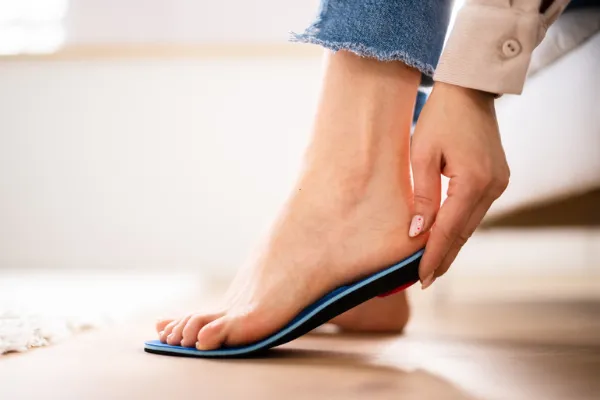
Orthotics, sometimes called foot orthoses, are devices worn inside shoes to provide support, cushioning or help manage pressure.
They can be made from different materials and come in a range of shapes.
Some are soft and cushioned.
Others are firmer and designed to support particular areas of the foot.
You may also hear people use the terms orthotics, orthoses and insoles interchangeably.
Although they aren't always exactly the same thing, they all describe products that can change how your foot is supported inside your shoe.
The purpose of an orthotic isn't necessarily to change the shape of your foot.
Instead, it may help improve comfort, redistribute pressure or reduce the strain on certain tissues during everyday activities.
And that distinction matters.
Because despite what some advertising suggests, orthotics aren't a magic fix for every foot problem.
1. How Do You Know if You Might Need Orthotics?
There isn't one simple test that tells everyone whether they need orthotics.
The decision depends on your symptoms, medical history, activities and the cause of your discomfort.
However, there are certain situations where insoles may be worth considering.
These include:
Persistent heel pain
Discomfort underneath the arch
Pain around the ball of the foot
Repeated pressure on particular areas
Some tendon-related foot problems
Certain conditions affecting foot joints
Discomfort during walking or standing
For example, someone with plantar fasciitis may find that suitable insoles help reduce heel pain.
Another person with painful pressure underneath the forefoot may benefit from cushioning or pressure redistribution.
But here's the important bit.
The same insole won't necessarily help both people.
And if your pain is caused by something that needs medical investigation, an insole may not be the right first step at all.
That's why understanding the cause matters more than simply choosing the product with the most impressive packaging.
2. Can Orthotics Help With Plantar Fasciitis?
Plantar fasciitis, also known as plantar fasciopathy, is a common cause of heel pain.
The plantar fascia is a strong band of tissue running along the bottom of your foot.
It helps support your arch and manage the forces involved in walking.
When this tissue becomes irritated or overloaded, you may experience pain underneath your heel.
Symptoms often include:
Pain during your first steps in the morning
Discomfort after sitting for a while
Pain after prolonged standing
Tenderness underneath the heel
Some people find that supportive footwear or suitable insoles reduce their symptoms.
Orthotics may help by changing how pressure is distributed and making walking more comfortable.
However, insoles are usually only one possible part of managing plantar fasciitis.
Other measures may include activity changes, stretching, strengthening and appropriate footwear.
And importantly, not all heel pain is plantar fasciitis.
If your heel pain keeps returning, a proper assessment can help identify what's happening.
You can also read our related article: Plantar Fasciitis in Plymouth: 7 Everyday Habits That Could Be Making It Worse.
3. Do Flat Feet Mean You Need Orthotics?
This is one of the biggest misconceptions about foot health.
Many people have naturally low arches or flat feet.
And for lots of them, this causes absolutely no problems.
If your feet are comfortable and you're able to enjoy your usual activities, having flat feet doesn't automatically mean you need treatment.
Flat feet aren't necessarily unhealthy feet.
Orthotics may be considered if someone has symptoms linked to their foot structure, such as pain or difficulty with certain activities.
But the decision should be based on the individual rather than simply how their arches look.
The same applies to people with high arches.
Having a particular foot shape doesn't automatically mean something needs correcting.
Your feet come in different shapes.
And that's perfectly normal.
4. Can Orthotics Help With Pain in the Ball of Your Foot?
If you've ever felt as though you're walking on a small stone, you'll know how uncomfortable forefoot pain can be.
The ball of your foot takes pressure whenever you walk, stand or push off.
Sometimes that pressure becomes concentrated in one area.
You may notice:
Aching underneath the toes
A burning sensation
Pain when walking on hard floors
Discomfort in thin-soled shoes
A feeling of pressure beneath the forefoot
There are several possible causes.
These include joint irritation, changes in the tissues beneath the foot, nerve problems and stress injuries.
Some insoles can help redistribute pressure away from painful areas.
Others provide additional cushioning.
But the type and position of the support matter.
An incorrectly positioned pad can sometimes make discomfort worse.
So, if you're experiencing persistent pain in the ball of your foot, it's worth understanding the cause before buying specialist inserts.
5. Can Orthotics Help With Knee Pain?
This is another question we hear frequently.
And the answer is: sometimes.
Your feet, ankles, knees and hips all work together when you walk.
Changes in how forces move through your feet may influence comfort further up the leg.
For certain conditions, such as some types of knee pain, foot orthoses may provide short-term symptom relief for some people.
However, they aren't suitable for every cause of knee pain.
And they shouldn't be expected to correct every movement pattern or prevent arthritis.
Orthotics may be helpful for selected people with knee discomfort, but they aren't a universal treatment.
If your knee pain is persistent, swollen or affecting everyday activities, an assessment by an appropriate healthcare professional is important.
You may need advice about strengthening, activity changes or other treatments.
6. What's the Difference Between Custom Orthotics and Shop-Bought Insoles?
Now we come to the big question.
Do you really need custom-made orthotics?
Or could something from a pharmacy or sports shop work just as well?
Let's look at the differences.
Shop-Bought Insoles
These are sometimes called prefabricated or off-the-shelf insoles.
They're made in standard sizes and shapes.
You can usually buy them from pharmacies, shoe shops or online retailers.
They may provide:
Extra cushioning
General arch support
Improved comfort inside footwear
Some redistribution of pressure
They also tend to cost less than custom-made devices.
For certain common foot conditions, a suitable shop-bought insole may provide benefits similar to a custom option.
Custom Orthotics
Custom orthotics are made to a prescription based on an individual assessment.
They may be designed to accommodate a particular foot shape, provide support in specific areas or redistribute pressure in a more targeted way.
They can be useful when standard insoles don't meet someone's needs.
However, they generally cost more.
And custom-made doesn't automatically mean better for everyone.
Research comparing custom and prefabricated foot orthoses for some common conditions has not consistently found custom devices to be superior.
The most appropriate option depends on the person, the problem and the intended treatment goal.
Custom Orthotics vs Shop-Bought Insoles: A Simple Comparison
Feature | Shop-Bought Insoles | Custom Orthotics |
|---|---|---|
Cost | Usually lower | Usually higher |
Fit | Standard sizes and shapes | Made to an individual prescription |
Availability | Often available immediately | Usually require assessment and manufacture |
Cushioning | Many options available | Can be tailored to specific needs |
Support | General or condition-specific designs | Individually specified support |
Best suited to | People whose needs can be met by a standard design | People needing more specific accommodation or pressure management |
Guaranteed to relieve pain? | No | No |
The best insole isn't necessarily the most expensive one. It's the one that's appropriate for your needs and actually helps.
7. Are Custom Orthotics Worth the Money?
They can be.
But not for everyone.
If you have a specific foot problem that hasn't responded to simpler options, custom orthotics may be worth discussing.
They may also be useful when your foot shape or pressure needs make standard products unsuitable.
However, if you're comfortable in supportive footwear and a shop-bought insole provides enough relief, you may not need anything more complicated.
And sometimes, the best treatment doesn't involve insoles at all.
For example, strengthening exercises or changes to your daily activities may be more important for certain conditions.
Before investing in custom orthotics, it's reasonable to ask what problem they're intended to solve and what benefit you can realistically expect.
A good assessment should help answer those questions.
8. Can the Wrong Insoles Make Foot Pain Worse?
Yes, they can.
Although insoles are widely available, that doesn't mean every design suits every foot.
An insole that's too firm, too high under the arch or poorly positioned may cause discomfort.
You might notice:
New pressure underneath your arch
Rubbing inside your shoes
Increased heel pain
Cramped toes
Discomfort around your ankles
Pain in an area that wasn't previously sore
Sometimes the problem isn't the insole itself.
It may simply be taking up too much room inside your shoe.
Adding an insole to a shoe that's already tight can create new pressure points.
If an insole causes significant pain, numbness, rubbing or skin damage, stop using it and seek advice.
Don't assume that pain means the insole is working.
Your feet shouldn't have to suffer to get used to a product.
9. Do You Need to Wear Orthotics Forever?
Not necessarily.
Some people use insoles for a short period while managing a particular problem.
Others find them helpful for certain activities, such as long walks or work shifts.
And some people with ongoing conditions may benefit from longer-term use.
It depends on why the orthotics were recommended.
For example, someone using an insole to reduce pressure while recovering from a painful condition may eventually need less support.
Another person with a long-term foot problem may continue using orthotics because they improve comfort.
Orthotics aren't automatically a lifelong commitment.
Your needs can change.
And it's sensible to review whether they're still helping.
10. Should Orthotics Feel Comfortable Straight Away?
They should not cause significant pain.
However, some people notice that a new orthotic feels different from their usual footwear.
A short adjustment period may be recommended, particularly with firmer devices.
This often involves wearing them for gradually increasing periods.
But there's an important difference between getting used to a new feeling and developing pain.
Sharp pain, numbness, blisters or increasing discomfort are not things you should simply push through.
If your orthotics have been prescribed by a healthcare professional, follow their advice about introducing and reviewing them.
If something doesn't feel right, ask for help.
11. Can You Put Orthotics in Any Shoes?
Unfortunately, not always.
Orthotics need enough room to fit comfortably.
And some footwear simply doesn't provide that space.
For example, very narrow shoes may squeeze your feet once an additional insole is added.
Shoes with removable insoles can sometimes make fitting orthotics easier.
When choosing footwear to use with orthotics, consider:
Enough room for your toes
A secure fit around the heel
Adequate depth inside the shoe
A suitable sole
Comfort when walking
An orthotic can't always compensate for poorly fitting footwear.
Sometimes changing your shoes is the more useful first step.
12. Five Signs Your Current Insoles Might Not Be Right
If you're already using insoles, pay attention to how your feet feel.
Here are five signs that something may need reviewing.
1. Your Feet Hurt More Than Before
New or increasing pain suggests the support may not be suitable.
2. You Have New Pressure Marks
Redness, rubbing or blisters can indicate excessive pressure.
3. Your Shoes Feel Too Tight
An insole may be taking up too much space.
4. Your Symptoms Haven't Improved
If you've been using insoles consistently and the original problem remains unchanged, it's worth reviewing the diagnosis and treatment plan.
5. Your Insoles Are Worn Out
Materials can compress or lose their shape over time.
If your insoles are damaged or no longer comfortable, they may need replacing.
Don't keep using an uncomfortable insole simply because you've already paid for it.
We've all kept something longer than we should because it was expensive.
But your feet don't need to be part of that particular experiment!
13. When Should You See a Podiatrist About Orthotics?
You don't need to buy insoles before asking for advice.
In fact, if your foot pain keeps returning, an assessment may be the more sensible first step.
Consider seeking professional advice if:
Your heel pain isn't improving.
You have recurring pain in the arches.
The ball of your foot hurts when walking.
You've tried different insoles without success.
Your shoes regularly cause pressure or rubbing.
You're unsure whether orthotics would help.
Your foot pain is affecting work, exercise or everyday activities.
Some symptoms need more urgent attention.
Seek prompt medical advice if you have severe pain, significant swelling, an inability to bear weight or pain following a serious injury.
If you have diabetes, poor circulation or reduced feeling in your feet, get professional advice before using inserts that could create new pressure points.
Orthotics should help manage a diagnosed problem, not delay investigation of something more serious.
14. What Happens During an Orthotics Assessment?
An appropriate assessment should begin with your symptoms, not a sales pitch.
A healthcare professional may ask:
Where does your foot hurt?
When did the pain start?
Is it worse in the morning or after activity?
What shoes do you usually wear?
Have you tried insoles before?
What activities are you struggling with?
What treatments have you already tried?
They may then assess the relevant parts of your feet and consider how your symptoms relate to everyday activities.
Depending on the findings, the recommendations could include footwear changes, exercises, a suitable insole or referral for further assessment.
A useful assessment should explain why a particular treatment is being recommended.
And you should feel comfortable asking questions.
15. How Can Derriford Therapies Help With Foot Pain in Plymouth?
At Derriford Therapies, we believe in putting your foot health first.
That means taking the time to understand your concerns and offering honest advice about appropriate next steps.
Our HCPC-registered podiatrists can assess a range of foot health problems, including painful pressure areas, corns, calluses, nail concerns and other symptoms affecting comfort.
We can also discuss footwear and whether your current shoes may be contributing to your discomfort.
If your symptoms suggest that a specialist biomechanical assessment, orthotic prescription, physiotherapy or medical investigation is needed, we can explain the appropriate next steps.
We won't tell you that everyone needs custom orthotics.
Because they don't.
Sometimes simple footwear advice is useful.
Sometimes a standard insole may be worth considering.
And sometimes the problem needs a completely different treatment.
Our aim is to help you understand your options rather than spend money on something you may not need.
Why Choose Derriford Therapies?
We're a friendly, approachable podiatry clinic based in Plymouth, helping people care for their feet since 2022.
Led by Clinical Director Chelsea Louise Tritschler, our HCPC-registered team believes in professional care, practical advice and making patients feel comfortable.
Our clinic offers:
Bright, modern treatment rooms
Ground-floor access with a disabled access ramp
Convenient free parking nearby
Simple online booking
Friendly reception support
Appointments tailored to your individual needs
Whether you're dealing with recurring foot discomfort or simply want advice about your foot health, we're here to help.
And don't worry if you've already got a drawer full of insoles that didn't quite work.
You certainly wouldn't be the first!
So, Do You Really Need Orthotics?
The answer is:
Maybe. But not necessarily.
Orthotics can be useful for certain foot problems.
They may help improve comfort, redistribute pressure or support specific areas.
But they aren't a universal solution.
And custom-made orthotics aren't automatically better than shop-bought insoles.
The right choice depends on your symptoms, your footwear and the underlying cause of your discomfort.
The most important step is understanding why your feet hurt before deciding what to put inside your shoes.
If you're struggling with persistent foot pain or aren't sure whether insoles might help, our friendly team at Derriford Therapies in Plymouth is happy to discuss your concerns.
Book a foot health appointment online or give our reception team a call to find out what support may be appropriate for you.
Because your feet deserve proper care.
Not another expensive pair of insoles sitting unused at the bottom of the wardrobe!
Derriford Therapies — helping Plymouth put its best foot forward.

Ask Derriford Therapies And Their Team
Fill in the form to request a call from our team. One of our team members will call you for FREE and answer any questions or concerns you may have about your condition
Where To Find Derriford Therapies
If you have any questions before scheduling an appointment or for general inquiries, please use the contact us button below. Our team will promptly reach out to assist you.
Opening Hours
Monday: 09.30- 17.30
Tuesday: 09.30- 17.30
Wednesday: 08.30- 17.30
Thursday: 08.30- 17.30
Friday: 08.30- 17.30
Saturday: By appointment only
Sunday: Closed