![Non US - Podiatry [SNAPSHOT]](https://images.leadconnectorhq.com/image/f_webp/q_80/r_1200/u_https://assets.cdn.filesafe.space/JmxfbASJamGHvnyGIV0D/media/6a4b8013b10447eb52403dfa.png )
Tips & Advice From Derriford Therapies
Bunions in Plymouth: Why Do They Develop and What Can You Do About Them?
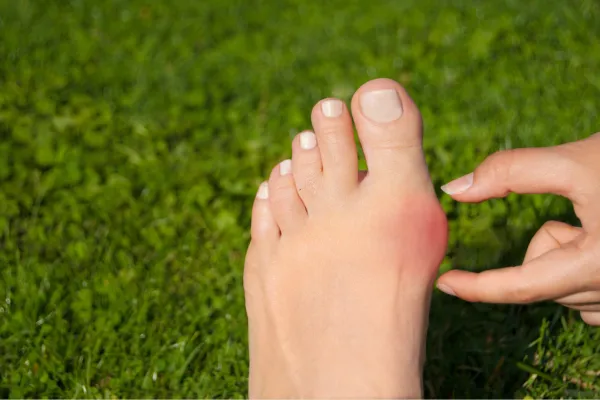
Have you noticed a bump developing at the side of your big toe?
Perhaps your favourite shoes suddenly feel too tight. Maybe the area gets red and sore after walking. Or perhaps your big toe seems to be slowly leaning towards its neighbours.
You may have a bunion.
Bunions are very common, but that doesn't mean you have to simply put up with the discomfort.
At Derriford Therapies in Plymouth, we help people understand why their bunions are causing problems and what can be done to keep their feet comfortable and active.
What is a bunion?
A bunion is a change in the position of the big toe joint.
The medical name is hallux valgus, but don't worry – we're quite happy calling it a bunion!
As the big toe starts to lean towards the second toe, the joint at the base of the big toe becomes more prominent. This creates the familiar bump on the side of the foot.
For some people, a bunion causes very little trouble.
For others, it can become painful, rub against shoes and make walking uncomfortable.
Why do bunions develop?
There isn't always one simple reason.
Your natural foot shape and genetics can play an important part. If bunions seem to run in your family, you may be more likely to develop one.
Other factors can include:
The natural shape and structure of your feet
The way your feet move when you walk
Joint problems, including some types of arthritis
Footwear that puts extra pressure around the toes
Previous injuries or changes affecting the foot
You may have heard that tight shoes cause bunions.
It's a little more complicated than that.
Shoes aren't necessarily the sole reason a bunion develops, but narrow or poorly fitting footwear can certainly put pressure on an existing bunion and make symptoms more uncomfortable.
And yes, we resisted making a "sole reason" joke for approximately three seconds.
What does a bunion feel like?
The most obvious sign is usually the bump at the base of the big toe.
But bunions can cause other problems too.
You might notice:
Pain around the big toe joint
Redness or irritation over the bump
Swelling around the joint
Shoes rubbing against the side of your foot
Hard skin or corns caused by pressure
Reduced movement in the big toe
Pain when walking
Difficulty finding comfortable footwear
The big toe pushing towards or underneath the second toe
Sometimes the bunion itself isn't particularly painful, but the changes in your foot can create pressure elsewhere.
That's why it's useful to look at the whole foot, rather than just the bump.
Will my bunion go away on its own?
Unfortunately, once the shape of the joint has changed, a bunion isn't likely to simply disappear.
Creams, exercises, splints and insoles cannot magically straighten the joint back to its original position.
That doesn't mean there's nothing you can do.
There are plenty of ways to reduce pressure, improve comfort and manage the symptoms of a bunion.
And the earlier you understand what's happening, the easier it can be to make sensible choices about footwear and foot care.
Can changing my shoes help?
Yes. For many people, footwear is one of the first things worth looking at.
If the front of your shoe is narrow, your toes can become squeezed together and the bunion may rub against the side of the shoe.
Look for shoes with:
Plenty of room around the toes
A wide and deep toe area
Soft materials around the bunion
Secure fastening such as laces or straps
Good support
A comfortable heel height
The important thing is to choose a shoe that matches the shape of your foot rather than asking your foot to squeeze itself into the shape of the shoe.
Your toes will be grateful.
Can bunion pads help?
Sometimes.
Soft pads can reduce rubbing between the bunion and your footwear.
However, you need to make sure the pad doesn't take up so much space that it makes your shoe even tighter.
If you're constantly padding, cushioning and rearranging your footwear but the bunion is still painful, it may be time to have it assessed.
Can orthotics help bunions?
Orthotics are insoles designed to support or change the way forces and pressure act through your feet.
They cannot remove a bunion or permanently straighten your big toe.
However, for some people, orthotics may help improve comfort or manage other problems linked to how the foot is functioning.
Whether they are suitable depends on your individual feet and symptoms.
At Derriford Therapies, we don't believe every person with a bunion automatically needs an orthotic.
We assess first and recommend treatment based on what we actually find.
What about bunion correctors and splints?
You've probably seen plenty of these online.
They often promise straighter toes with remarkably enthusiastic before-and-after pictures.
A splint or separator may temporarily change the position of the toe while you're wearing it, and some people find certain devices comfortable.
However, they shouldn't be expected to permanently correct the underlying joint change.
If you're thinking about buying a device because your bunion is painful, it can be useful to speak to a podiatrist first.
You might save yourself both money and a drawer full of mysterious foot gadgets.
Can exercises help?
Exercises won't make an established bunion disappear.
However, depending on your individual situation, exercises may sometimes be recommended to help maintain movement, strength or general foot function.
The right exercise depends on what is happening with your foot.
That's another reason an individual assessment can be more useful than following a random exercise video online.
Should I have the hard skin removed?
Bunions can change where pressure falls across the foot.
As a result, some people develop hard skin or corns around the bunion, underneath the foot or between the toes.
Please don't be tempted to attack these areas with blades or other sharp tools at home.
A podiatrist can safely assess and treat troublesome hard skin and corns while also looking at why that pressure is developing.
Removing the hard skin may provide relief, but reducing the pressure that caused it is also important.
When should I see a podiatrist about a bunion?
You don't have to wait until the pain becomes unbearable.
Consider having your feet assessed if:
Your bunion regularly hurts
Shoes are becoming difficult to wear
You're developing corns or painful hard skin
Your big toe is becoming increasingly difficult to move
The position of your toes appears to be changing
Walking or exercise is becoming uncomfortable
You're changing your activities because of foot pain
You've tried changing footwear but you're still struggling
If you develop sudden severe pain, significant swelling, redness, heat or other symptoms that concern you, seek appropriate medical advice promptly.
Will I need bunion surgery?
Not everyone with a bunion needs surgery.
Many people manage their symptoms with suitable footwear, pressure relief and other conservative treatments.
However, surgery is the only way to structurally correct an established bunion.
If your symptoms become severe or continue to affect your everyday life despite other treatments, a podiatrist can discuss whether further assessment or referral may be appropriate.
Our job is to give you honest information about your options – not to push you towards treatment you don't need.
How Derriford Therapies can help with bunions in Plymouth
At Derriford Therapies in Plymouth, our HCPC-registered podiatrists can assess your bunion and, importantly, the rest of your foot.
We'll look at where you're experiencing pain, how your toes and joints are moving, areas of pressure and the footwear you regularly use.
Depending on what we find, we may discuss options such as:
Footwear changes
Managing pressure and rubbing
Treatment of painful corns or hard skin
Padding where appropriate
Orthotics where suitable
Exercises or other advice when appropriate
Referral for further assessment if needed
There's no one-size-fits-all bunion treatment.
The aim is to help you understand your feet and find realistic ways to stay comfortable, mobile and confident.
Don't wait until your bunion decides which shoes you can wear
It's very easy to ignore a bunion when it first appears.
Then, gradually, you may notice certain shoes are uncomfortable. Longer walks become less appealing. The joint starts aching after a busy day.
Before you know it, your bunion seems to have appointed itself manager of your footwear collection.
It doesn't need to get to that point.
If you're worried about a bunion or big toe pain in Plymouth, our friendly team at Derriford Therapies can assess your feet and talk you through your options.
You don't have to wait until foot pain starts limiting the things you enjoy.
Book your podiatry appointment online or give our reception team a call. We'll help you work out the best next step for your feet.

Ask Derriford Therapies And Their Team
Fill in the form to request a call from our team. One of our team members will call you for FREE and answer any questions or concerns you may have about your condition
Where To Find Derriford Therapies
If you have any questions before scheduling an appointment or for general inquiries, please use the contact us button below. Our team will promptly reach out to assist you.
Opening Hours
Monday: 09.30- 17.30
Tuesday: 09.30- 17.30
Wednesday: 08.30- 17.30
Thursday: 08.30- 17.30
Friday: 08.30- 17.30
Saturday: By appointment only
Sunday: Closed