![Non US - Podiatry [SNAPSHOT]](https://images.leadconnectorhq.com/image/f_webp/q_80/r_1200/u_https://assets.cdn.filesafe.space/JmxfbASJamGHvnyGIV0D/media/6a4b8013b10447eb52403dfa.png )
Tips & Advice From Derriford Therapies
Fungal Nail Treatment in Plymouth: Why Won’t My Fungal Nail Go Away?
Fungal Nail Treatment in Plymouth: Why Won’t My Fungal Nail Go Away?
You've been applying the treatment.
You've been patient.
You've possibly spent more time inspecting one toenail than you ever thought reasonable.
And yet… the fungal nail is still there.
Fungal nail infections can be frustrating because they often take a long time to improve. Even when you're doing the right things, the damaged part of the nail doesn't suddenly return to normal overnight.
At Derriford Therapies in Plymouth, we regularly see people who have tried treating a suspected fungal nail themselves without getting the result they hoped for.
So, why can fungal nails be so stubborn – and what can you do about them?
What is a fungal nail infection?
A fungal nail infection happens when fungi infect the nail.
The medical term is onychomycosis, which is considerably harder to say than "fungal nail", so we'll stick with the simpler version.
Toenails are commonly affected.
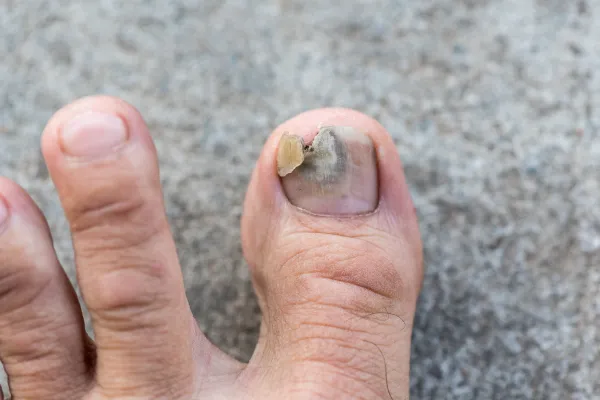
A fungal nail may become:
Yellow, white or brown
Thicker than usual
Brittle or crumbly
Rough or uneven
Difficult to cut
Partly separated from the skin underneath
Uncomfortable inside shoes
Sometimes only one nail is affected. In other cases, the infection can involve several toenails.
Why won't my fungal nail go away?
There are several possible reasons.
One of the biggest is simply time.
Toenails grow slowly. Even when treatment is working, the damaged nail usually needs to grow out before it can be replaced by healthier-looking nail.
That means improvement can take many months.
Unfortunately, toenails have never been known for their sense of urgency.
1. It might not actually be a fungal nail
This is an important point.
Not every thick, yellow or damaged toenail is caused by fungus.
Nails can change appearance for other reasons, including:
Repeated pressure from footwear
Previous injury to the toe
Regular sporting activity
Certain skin conditions
Changes to the nail as we get older
Other health conditions
If you've been applying fungal nail treatment for months without improvement, it may be worth checking whether fungus is actually responsible.
A podiatrist can assess the nail and discuss whether further testing or another type of treatment may be appropriate.
2. The treatment may not be reaching the infection effectively
Fungal nails can become very thick.
If you're applying a topical treatment – meaning a treatment painted or applied directly onto the nail – it may have difficulty reaching where it's needed.
This is one reason professional reduction of a thickened nail can sometimes form part of managing the problem.
A podiatrist can carefully reduce some of the thickness and manage uncomfortable or damaged areas of the nail where appropriate.
Please don't attempt to aggressively file, drill or cut away a thick nail yourself.
It's surprisingly easy to damage the skin underneath.
3. You may not have used the treatment for long enough
Treating a fungal nail is rarely a quick job.
You may need to use some treatments consistently for a long period.
People understandably become discouraged when they've been applying something for weeks and the nail still looks much the same.
But remember: the old damaged nail has to grow out.
You're looking for healthy new nail growth from the base rather than expecting the existing damaged section to magically become clear again.
Always follow the instructions supplied with your treatment or the advice given by an appropriate healthcare professional.
4. Athlete's foot could be hanging around too
Fungal nail infections and athlete's foot can sometimes occur together.
Athlete's foot is a fungal infection of the skin. It can cause symptoms such as itching, peeling, cracking or soreness, particularly between the toes.
If fungus is still present on the surrounding skin, this may need attention as part of managing your overall foot health.
Treating one problem while ignoring another can make things more complicated.
If the skin between your toes is regularly itchy, flaky or cracked, mention it when you see your podiatrist.
5. Your footwear could be part of the problem
Our feet spend a considerable amount of time inside socks and shoes.
Warm, damp environments can make life rather comfortable for fungi.
If your feet sweat heavily or your shoes don't have enough time to dry between wears, it can be worth changing a few everyday habits.
Try to:
Change into clean socks regularly
Allow shoes to dry properly between wears
Rotate footwear rather than wearing the same pair every day
Dry carefully between your toes after bathing
Avoid sharing nail clippers, files, socks or footwear
Wear suitable footwear in communal changing and shower areas
These habits won't magically remove an established fungal nail, but they can form part of sensible fungal foot care.
6. The nail may keep getting damaged
Repeated trauma can make a toenail look worse and may complicate treatment.
Running, walking long distances or wearing shoes that are too short can repeatedly push the nail against the front of the shoe.
You might not even realise it's happening.
Your shoes should have enough room so your toes aren't constantly hitting the end.
If one particular nail keeps becoming thickened or damaged, it's worth considering whether footwear pressure could be contributing.
7. You may need a different treatment plan
There isn't one treatment that's suitable for every fungal nail.
The right option can depend on factors such as:
How many nails are affected
How much of each nail is involved
How thick the nail has become
How long you've had the problem
Whether the nail is painful
Your general health
Medicines you're already taking
Some treatments are applied directly to the nail.
In certain circumstances, oral antifungal medication – tablets taken by mouth – may be considered following appropriate medical assessment.
These medicines aren't suitable for everybody, so they need to be discussed with an appropriate healthcare professional.
Should I cut my fungal nail?
Keeping nails at a sensible length can help, but thick fungal nails can be extremely difficult to cut.
Forcing ordinary nail clippers through a very thick nail isn't a great idea.
You can end up splitting the nail or accidentally damaging the surrounding skin.
If your nail has become too thick to manage comfortably at home, a podiatrist can safely reduce and trim it for you.
This can also make the nail more comfortable inside your footwear.
Can I just cover a fungal nail with nail varnish?
It's understandable to feel self-conscious about a discoloured nail, particularly when you're wearing sandals or going on holiday.
However, covering the nail doesn't treat the underlying cause.
Some nail products may also interfere with particular treatments.
If you're actively treating a fungal nail, check the instructions for your treatment or ask your podiatrist before applying cosmetic nail products.
Is a fungal nail dangerous?
For many otherwise healthy people, fungal nail infections are more frustrating than dangerous.
However, you should be more cautious if you have a health condition that puts your feet at greater risk.
If you have diabetes, problems with circulation, reduced feeling in your feet or another condition affecting foot health, it's sensible to seek professional advice rather than attempting aggressive home treatment.
You should also seek medical advice if you notice significant redness, swelling, increasing pain, discharge or other signs of infection around the toe.
When should I see a podiatrist about a fungal nail?
Consider booking an appointment if:
You're not sure whether the nail actually has a fungal infection
The nail has become very thick
You can't comfortably cut the nail yourself
The nail is painful inside your shoes
Several nails are affected
You've tried treatment but haven't noticed improvement
The problem keeps returning
You're concerned about changes in the appearance of your nail
The sooner we understand what we're dealing with, the easier it is to discuss realistic treatment options.
How Derriford Therapies can help with fungal nails in Plymouth
At Derriford Therapies in Plymouth, our HCPC-registered podiatrists can assess your toenails and talk you through what may be causing the changes.
If your nail is thick or uncomfortable, we may be able to carefully reduce and manage it.
We'll also look at the bigger picture.
That can include your footwear, the condition of the surrounding skin, signs of athlete's foot and what treatments you've already tried.
Most importantly, we'll be realistic with you.
Fungal nail treatment can take time.
We'd much rather explain what you can reasonably expect than promise you perfect-looking toenails by next Tuesday.
Don't let an embarrassing toenail stop you asking for help
We know some people feel embarrassed about showing us a fungal or damaged toenail.
Please don't.
We are podiatrists.
Toenails are very much part of the job, and we can confidently say yours won't be the first unusual toenail we've seen.
If you've been hiding your feet, struggling to cut a thick nail or repeatedly buying treatments that don't seem to be working, it may be time to find out what's actually going on.
If you're looking for fungal nail treatment in Plymouth, book an appointment with Derriford Therapies online or give our friendly reception team a call.
Let's take a proper look at that stubborn toenail and work out the most suitable next step.

Ask Derriford Therapies And Their Team
Fill in the form to request a call from our team. One of our team members will call you for FREE and answer any questions or concerns you may have about your condition
Where To Find Derriford Therapies
If you have any questions before scheduling an appointment or for general inquiries, please use the contact us button below. Our team will promptly reach out to assist you.
Opening Hours
Monday: 09.30- 17.30
Tuesday: 09.30- 17.30
Wednesday: 08.30- 17.30
Thursday: 08.30- 17.30
Friday: 08.30- 17.30
Saturday: By appointment only
Sunday: Closed