![Non US - Podiatry [SNAPSHOT]](https://images.leadconnectorhq.com/image/f_webp/q_80/r_1200/u_https://assets.cdn.filesafe.space/JmxfbASJamGHvnyGIV0D/media/6a4b8013b10447eb52403dfa.png )
Tips & Advice From Derriford Therapies
Ingrown Toenail Treatment in Plymouth: Why Ignoring It Could Make Things Worse
It starts with a little niggle.
Perhaps your big toe feels slightly sore when you put your shoes on. You have a quick look, give the nail a little trim and think, "That'll probably sort itself out."
A few days later, your toe is even more uncomfortable.
Suddenly, putting your socks on feels like a challenge, and accidentally knocking your toe against the furniture becomes an experience you'd rather not repeat.
Sound familiar?
Ingrown toenails might seem like a small problem, but they can become surprisingly painful if left untreated.
At Derriford Therapies in Plymouth, we understand just how frustrating a painful toenail can be.
And while some mild cases settle with simple care, others need professional attention to prevent the problem from getting worse.
So, what actually causes an ingrown toenail, why shouldn't you ignore it, and what can a podiatrist do to help?
Let's find out.
What Exactly Is an Ingrown Toenail?
An ingrown toenail happens when the edge or corner of your toenail grows into, or presses against, the surrounding skin.
Instead of growing comfortably forwards, the nail irritates the soft tissue beside it.
Your body doesn't particularly appreciate this.
The skin can become sore, red, swollen and tender to touch.
And because your toes spend much of the day inside shoes, the constant pressure can make things even more uncomfortable.
Ingrown toenails most commonly affect the big toes, although they can develop on other toes too.
The medical name is onychocryptosis.
Quite a mouthful for something that causes so much trouble at the other end of your body!
Why Do Ingrown Toenails Happen?
There isn't always one obvious cause.
Sometimes several small things contribute to the problem.
Here are some of the most common reasons.
1. Cutting Your Toenails Too Short
This is one of the biggest culprits.
Many people trim their toenails very short because they think it looks tidier or will stop the nail catching on their socks.
Unfortunately, cutting down into the corners can encourage the surrounding skin to overlap the nail as it grows.
A better habit is to trim your toenails straight across, leaving the corners visible rather than digging down the sides.
And resist the temptation to keep cutting away at a painful corner.
That can make things worse.
2. Wearing Shoes That Squeeze Your Toes
Your toes need room to move.
If your shoes are too narrow or tight around the front, they can push your toes together and place pressure on the edges of your nails.
Over time, this may contribute to an ingrown toenail.
This can happen with everyday shoes, work footwear and certain sports shoes.
If your toes feel squashed by the end of the day, your footwear might be trying to tell you something.
3. Naturally Curved Toenails
Some people simply have toenails that curve more than others.
If your nails naturally grow downwards at the sides, they may be more likely to press against the surrounding skin.
This isn't something you've necessarily caused.
It's just the way your nails grow.
However, understanding your nail shape can help you manage it more safely.
4. An Injury to Your Toe
Have you ever stubbed your big toe on a doorframe?
It's amazing how quickly a perfectly ordinary piece of furniture can become your worst enemy.
An injury can damage the nail or change how it grows.
Repeated pressure from running, walking or certain activities may also contribute to nail problems.
5. Sweaty Feet and Soft Skin
Moisture can soften the skin around your toenails.
When the skin becomes softer, it may be more easily irritated by pressure from the nail.
This can sometimes contribute to ingrown toenails, particularly when combined with tight footwear.
How Do You Know If You Have an Ingrown Toenail?
The early signs can be quite subtle.
You might notice:
Tenderness along one side of the toenail
Pain when wearing shoes
Redness around the nail edge
Mild swelling
Discomfort when pressing the affected area
As the problem develops, symptoms may become more noticeable.
The skin can become increasingly swollen, and you may notice fluid or pus coming from the area.
Sometimes extra red, fleshy tissue develops beside the nail as the body reacts to ongoing irritation.
If your toe is becoming more painful, swollen or inflamed, don't keep trying to cut the nail yourself.
Getting it assessed early may help prevent further problems.
What Happens If You Ignore an Ingrown Toenail?
It's tempting to hope a painful toenail will simply sort itself out.
And occasionally, a very mild case may improve when pressure is reduced and the nail is allowed to grow normally.
But if the nail continues pressing into the skin, the problem can become more difficult to manage.
Here's what can happen.
1. The Pain Can Get Worse
At first, you might only notice discomfort when wearing tight shoes.
But as the nail continues irritating the skin, the area can become increasingly sensitive.
Walking, standing and even wearing socks may become uncomfortable.
You might start changing how you walk to avoid pressure on the toe.
And that isn't ideal when your feet are supposed to be helping you move comfortably throughout the day.
2. The Skin Can Become Infected
When the nail damages the surrounding skin, it creates an opportunity for bacteria to enter.
This can lead to infection.
Signs may include:
Increasing redness
Swelling and warmth
Throbbing pain
Pus or discharge
An unpleasant smell
An infected ingrown toenail may need medical treatment as well as attention to the nail itself.
If you notice signs of infection, seek prompt advice from a healthcare professional.
If redness is spreading, you develop a fever or you feel generally unwell, seek urgent medical assessment.
3. Extra Tissue Can Develop Around the Nail
When the skin remains irritated for a long time, the body may produce extra soft tissue around the nail edge.
This is sometimes called hypergranulation tissue.
In plain English, it's extra red, fleshy tissue that develops as the body responds to ongoing irritation.
It may bleed easily and can make the area even more sensitive.
At this stage, simply trimming the nail at home is unlikely to solve the underlying problem.
4. The Problem May Keep Coming Back
Even if the discomfort settles temporarily, an ingrown toenail can return.
This is particularly common when the nail is naturally curved or the original cause hasn't been addressed.
Repeatedly digging into the nail corners may provide short-term relief but can leave sharp nail edges behind.
Those edges may then grow into the skin again.
If you've had the same ingrown toenail several times, it's worth discussing longer-term treatment options with a podiatrist.
5. It Can Be More Serious for People With Certain Health Conditions
For people with diabetes, poor circulation or reduced feeling in their feet, even a small nail problem deserves extra attention.
Reduced sensation may mean you don't notice how much damage is developing.
Poor circulation can also make healing more difficult.
If you have one of these conditions and notice a painful, swollen or damaged area around your toenail, seek professional advice promptly.
Don't wait for the problem to become severe.
Can You Treat an Ingrown Toenail at Home?
If the problem is very mild and there are no signs of infection, a few simple steps may help reduce irritation.
Wear shoes with plenty of room around your toes.
Avoid footwear that squeezes or presses against the painful area.
Keep your feet clean and dry.
Wash your feet gently and dry carefully, particularly around the toes.
Avoid cutting down the sides of the nail.
Trying to dig out the painful corner can damage the skin and make the problem worse.
Don't attempt bathroom surgery.
We know it's tempting to reach for the nail clippers, tweezers or whatever sharp object happens to be nearby.
But trying to remove an ingrown nail yourself can cause injury or infection.
And if the pain isn't improving, it's better to have the nail assessed rather than repeatedly trying home remedies.
How Does a Podiatrist Treat an Ingrown Toenail?
The right treatment depends on how severe the problem is, whether infection is present and whether the nail has become ingrown before.
At Derriford Therapies in Plymouth, our HCPC-registered podiatrists can assess your nail and explain the options available.
Treatment may involve several approaches.
Professional Nail Care
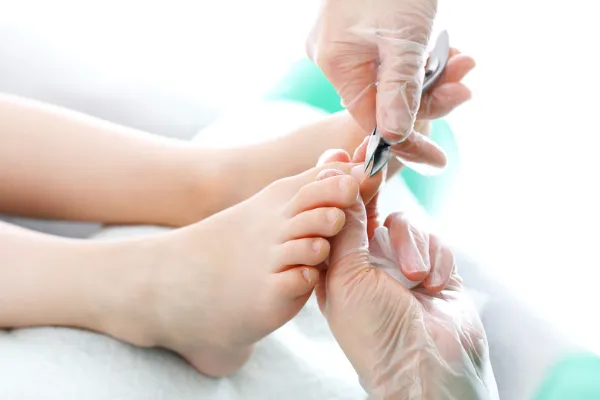
For some mild cases, carefully removing or reducing the troublesome nail edge may help relieve pressure.
Your podiatrist can use specialist instruments to manage the nail safely.
This may be suitable when the nail is only mildly ingrown and the surrounding skin isn't badly affected.
Advice to Reduce Pressure
Sometimes changes to footwear and nail-cutting habits can help prevent further irritation.
Your podiatrist can explain how to care for your nails and what to avoid.
Managing Infection
If infection is suspected, your podiatrist can assess the area and advise whether you need further medical treatment.
Antibiotics are not automatically needed for every ingrown toenail, and they don't remove the nail edge causing the problem.
Nail Surgery for Repeated or Severe Problems
For some people, an ingrown toenail keeps returning despite careful nail care.
In these cases, a minor nail procedure may be worth considering.
This usually involves removing the troublesome section of nail under local anaesthetic, which numbs the toe.
In suitable cases, a treatment may also be used to stop that section of nail growing back.
This can help reduce the chance of the same problem returning.
Not everyone needs nail surgery.
The most suitable option depends on your individual circumstances, and your podiatrist can explain whether a procedure is appropriate and where it can be provided.
Does Ingrown Toenail Treatment Hurt?
This is probably one of the first questions people want to ask.
And understandably so!
If your toe is already painful, the thought of someone touching it might not sound particularly appealing.
The amount of discomfort depends on the condition of the nail and the treatment needed.
Simple nail care may cause some sensitivity if the surrounding skin is inflamed.
For nail surgery, local anaesthetic is used to numb the toe before the nail is treated.
You may feel a brief sting when the anaesthetic is given, but the aim is to keep the procedure itself comfortable.
Your podiatrist should explain what to expect before treatment begins.
And if you're nervous, please say so.
There's absolutely no need to pretend you're feeling brave when you're not.
How Can You Prevent Ingrown Toenails?
While some people are naturally more prone to ingrown nails, a few simple habits may reduce the risk.
Cut your toenails straight across.
Avoid cutting deeply into the corners or trimming them excessively short.
Choose shoes that fit properly.
Make sure your toes aren't being squeezed together.
Keep your feet clean and dry.
Good foot hygiene helps protect the skin around your nails.
Check your toenails regularly.
Look out for redness, swelling or tenderness around the edges.
Get recurring problems assessed.
If the same toenail repeatedly becomes painful, there may be an underlying issue that needs professional attention.
Small changes can sometimes make a big difference.
Why Choose Derriford Therapies for Ingrown Toenail Care in Plymouth?
At Derriford Therapies, we understand that a painful toenail can affect far more than just your feet.
It can make walking uncomfortable, interfere with work and turn your favourite shoes into something you'd rather avoid.
Our friendly, HCPC-registered podiatry team takes the time to listen, assess your feet and explain what may be causing the problem.
We believe you deserve clear, honest advice about your treatment options.
Our Plymouth clinic offers:
Comfortable, modern treatment rooms
Ground-floor access with a disabled access ramp
Convenient free parking nearby
Easy online appointment booking
A welcoming team who understand that foot problems can sometimes feel embarrassing
And please don't worry about showing us a troublesome toenail.
We see feet every day.
A sore big toe isn't going to frighten us!
Don't Wait Until Every Step Hurts
An ingrown toenail might start as a small irritation, but it can become increasingly painful when the nail continues pressing into the skin.
The earlier you understand what's causing the problem, the easier it may be to manage.
Whether your toenail has just started feeling uncomfortable or you've been dealing with the same problem for months, professional advice can help you decide what to do next.
Need help with a painful ingrown toenail in Plymouth?
Contact our friendly team at Derriford Therapies or book a podiatry appointment online.
Because your big toe might be small, but it shouldn't get to dictate how comfortably you walk!
Derriford Therapies — helping Plymouth put its best foot forward.

Ask Derriford Therapies And Their Team
Fill in the form to request a call from our team. One of our team members will call you for FREE and answer any questions or concerns you may have about your condition
Where To Find Derriford Therapies
If you have any questions before scheduling an appointment or for general inquiries, please use the contact us button below. Our team will promptly reach out to assist you.
Opening Hours
Monday: 09.30- 17.30
Tuesday: 09.30- 17.30
Wednesday: 08.30- 17.30
Thursday: 08.30- 17.30
Friday: 08.30- 17.30
Saturday: By appointment only
Sunday: Closed