![Non US - Podiatry [SNAPSHOT]](https://images.leadconnectorhq.com/image/f_webp/q_80/r_1200/u_https://assets.cdn.filesafe.space/JmxfbASJamGHvnyGIV0D/media/6a4b8013b10447eb52403dfa.png )
Tips & Advice From Derriford Therapies
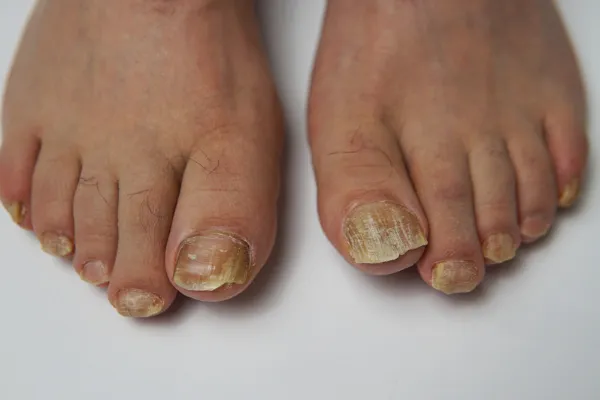
Why Do My Toenails Keep Getting Thicker? Podiatry Advice in Plymouth
Have you ever looked down at your feet and wondered when one of your toenails started looking more like a tiny roof tile?
Perhaps it's become thicker, harder to cut, or changed colour. Maybe you've even broken a pair of nail clippers trying to tackle it.
If that sounds familiar, you're certainly not alone.
Thick toenails are something we see regularly here at Derriford Therapies in Plymouth. And while they might seem like a small problem, they can become surprisingly uncomfortable, especially when you're wearing shoes.
The good news? Thick toenails are often manageable once we understand what's causing them.
So, why do toenails get thicker, and what can you do about it?
First, Why Do Toenails Become Thick?
Your toenails are made from a tough protein called keratin. It's the same material that makes up your fingernails and hair.
Normally, toenails grow slowly and fairly evenly.
But sometimes something affects how the nail grows. Instead of staying smooth and relatively thin, it can become thicker, harder, discoloured or misshapen.
And here's something worth knowing:
A thick toenail doesn't automatically mean you have a fungal infection.
There are several possible causes, and working out which one is responsible is the first step towards choosing the right care.
1. Getting Older Can Change Your Toenails
As we get older, our toenails often change.
They may grow more slowly, become harder or develop ridges. Some people also notice their nails becoming thicker over time.
This doesn't necessarily mean anything is seriously wrong.
However, thicker nails can become difficult to manage, particularly if bending down or reaching your feet isn't as easy as it used to be.
And when a nail becomes too thick, pressure from shoes can make it uncomfortable.
How podiatry can help: Professional nail care can reduce excess thickness, keep nails at a manageable length and help prevent painful pressure.
You don't have to struggle with stubborn nail clippers at home.
2. Your Shoes Could Be Part of the Problem
We all have that favourite pair of shoes.
The ones we wear everywhere, even though we know they're probably past their best.
Unfortunately, shoes that are too tight or shallow around the toes can put repeated pressure on your toenails.
Over time, this pressure may damage the area where the nail grows, causing it to become thicker or change shape.
This can be particularly common if you spend long hours on your feet or regularly wear footwear that presses against your toes.
A useful clue: If your toenail feels sore after wearing certain shoes, footwear pressure could be contributing to the problem.
Making sure your shoes have enough room around your toes may help prevent further irritation.
3. An Old Injury Might Be to Blame
Have you ever dropped something heavy on your toe?
Or stubbed it so hard that you briefly questioned every decision you'd made that day?
Even if the injury happened years ago, it can sometimes affect how your toenail grows.
Damage to the nail matrix (the area beneath the skin where your nail starts growing) can cause the nail to grow thicker, unevenly or in a different shape.
Sometimes the nail never quite returns to its original appearance.
Repeated minor injuries can have a similar effect.
For example, regularly wearing tight shoes or taking part in activities that put pressure on your toes can gradually affect nail growth.
How podiatry can help: Although we can't always reverse permanent nail damage, we can often make thickened nails more comfortable and easier to manage.
4. It Could Be a Fungal Nail Infection
Fungal nail infections are another common reason toenails become thicker.
Fungi are tiny organisms that can grow in or underneath the nail.
When this happens, the nail may become:
Yellow, white or brown
Thicker than usual
Brittle or crumbly
Uneven or distorted
Partly lifted away from the skin underneath
Sometimes several nails are affected.
But remember, not every thick or yellow toenail is fungal.
This matters because using fungal nail treatments on a nail that isn't infected is unlikely to solve the problem.
If a fungal infection is suspected, your podiatrist can assess the nail and discuss whether testing or further treatment is appropriate.
And if you've already spent months applying something from the chemist without seeing much improvement, it may be time to find out what's actually happening.
5. Certain Skin Conditions Can Affect Your Nails
Some skin conditions can also change the appearance of toenails.
One example is psoriasis, a condition that can cause patches of dry, flaky or irritated skin.
Psoriasis can also affect nails, making them thicker, discoloured, ridged or pitted.
You might notice small dents in the nail surface or changes in how the nail attaches to the skin underneath.
These changes can sometimes look similar to a fungal infection.
That's why getting the right assessment is important.
Treating the appearance of a nail without understanding the cause can lead to frustration and wasted money.
6. Sometimes a Toenail Becomes Extremely Thick and Curved
Occasionally, a toenail becomes much thicker than normal and starts growing in a curved or twisted shape.
This is sometimes called onychogryphosis, although you may hear it described as a ram's horn nail.
Quite a name, isn't it?
These nails can become extremely difficult to cut and may cause pressure or pain inside shoes.
They are more commonly seen in older adults and can develop following repeated injury, long-term pressure or difficulties with nail care.
Trying to cut a very thick, curved nail yourself can be difficult and may cause injury.
Professional podiatry care can help reduce the thickness and length safely, making the nail much more comfortable.
Should You Try to Cut Thick Toenails Yourself?
It depends on how thick the nails are and whether you can reach them safely.
For mildly thickened nails, careful trimming may be manageable.
However, if your nails are extremely hard, curved, painful or difficult to reach, trying to force ordinary nail clippers through them isn't a great idea.
You could accidentally split the nail, damage the surrounding skin or leave a sharp edge that causes discomfort.
Never try to cut away thickened nail with sharp household tools.
And if you have diabetes, poor circulation or reduced feeling in your feet, it's particularly important to avoid risky home treatments.
A podiatrist can use specialist equipment to reduce thickened nails safely and comfortably.
How Can Derriford Therapies Help With Thick Toenails?
At Derriford Therapies in Plymouth, we know that even a small nail problem can have a big impact on your comfort.
Perhaps your toenail catches on your socks.
Maybe your shoes are becoming uncomfortable.
Or perhaps you're simply fed up with struggling to cut your nails.
Whatever the reason, we're here to help.
Our HCPC-registered podiatrists can assess your toenails, discuss possible causes and recommend suitable care.
Depending on your needs, your appointment may include:
Professional nail cutting: Safely trimming nails that are too thick or difficult to manage.
Nail reduction: Carefully reducing excess nail thickness using specialist podiatry equipment.
Footwear advice: Helping you understand whether pressure from your shoes could be contributing to the problem.
Nail health assessment: Looking for signs of fungal infection, injury or other nail conditions.
Ongoing foot care: Helping you keep troublesome toenails comfortable and manageable.
Our approach is simple.
We want you to understand what's happening with your feet and what your options are.
And if we think something needs further investigation or treatment elsewhere, we'll explain that too.
When Should You Get a Thick Toenail Checked?
Not every thick toenail needs urgent attention.
However, it's worth booking an assessment if:
Your nail is becoming painful.
You're struggling to cut it safely.
The nail is catching on socks or pressing against shoes.
It has changed colour or shape.
You think you may have a fungal infection.
The problem keeps getting worse.
A new dark streak or unexplained dark patch, particularly on one nail, should be assessed promptly by a healthcare professional. Not all dark nail changes are caused by injury or fungus.
Likewise, if you notice redness, swelling, discharge or increasing pain around a nail, seek medical advice rather than waiting for a routine appointment.
If you have diabetes or poor circulation, don't ignore new nail problems or any breaks in the skin.
Can Thick Toenails Become Normal Again?
This is one of the questions we're often asked.
And the answer is: sometimes, but it depends on the cause.
If the thickening is linked to a treatable condition, the nail may gradually improve as healthy nail grows through.
But toenails grow slowly.
A big toenail can take around 12–18 months to grow out completely, so visible changes can take time.
If the nail has become permanently damaged through injury or repeated pressure, it may never return to its original appearance.
That doesn't mean you have to live with discomfort.
Regular professional nail care can help keep even very thick nails manageable.
Don't Let Thick Toenails Become a Bigger Problem
It's easy to dismiss a thick toenail as something that just happens with age.
But if it's making walking uncomfortable, catching on your socks or turning nail cutting into a wrestling match, there's no need to keep struggling.
At Derriford Therapies, we believe looking after your feet should be just as normal as looking after your teeth or having your eyes checked.
Our friendly podiatry team in Plymouth is here to help you understand what's happening and keep your feet feeling comfortable.
Ready to give those stubborn toenails some attention?
Book an appointment online or give our friendly reception team a call.
Because life's too short to spend your evenings battling a toenail with a pair of clippers!
Derriford Therapies — helping Plymouth put its best foot forward.

Ask Derriford Therapies And Their Team
Fill in the form to request a call from our team. One of our team members will call you for FREE and answer any questions or concerns you may have about your condition
Where To Find Derriford Therapies
If you have any questions before scheduling an appointment or for general inquiries, please use the contact us button below. Our team will promptly reach out to assist you.
Opening Hours
Monday: 09.30- 17.30
Tuesday: 09.30- 17.30
Wednesday: 08.30- 17.30
Thursday: 08.30- 17.30
Friday: 08.30- 17.30
Saturday: By appointment only
Sunday: Closed