
Tips & Advice From Derriford Therapies
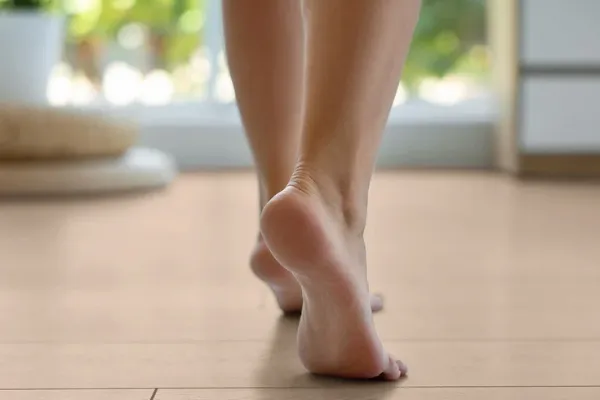
Why Does My Foot Hurt When I Walk Barefoot on Hard Floors?
You get out of bed in the morning.
You wander into the kitchen to put the kettle on.
And the moment your bare feet touch the cold kitchen tiles…
Ouch!
Suddenly, walking across your own home feels surprisingly uncomfortable.
Perhaps your heels ache.
Maybe the balls of your feet feel bruised.
Or perhaps your arches seem to complain every time you take a step.
Yet when you put your trainers on, the pain improves.
So, what's going on?
Are your floors too hard?
Are your feet becoming more sensitive?
Or is there something else happening underneath the surface?
If your feet hurt when walking barefoot on hard floors, there may be a reason beyond simply having sensitive feet.
Hard surfaces provide very little cushioning, which can make certain foot conditions more noticeable.
And while some people can walk barefoot comfortably, others may find that tiles, wooden flooring and concrete make their symptoms much worse.
At Derriford Therapies in Plymouth, we know how frustrating it can be when something as simple as walking around your home becomes painful.
So, let's explore why your feet might hurt on hard floors, which conditions could be responsible and what you can do to make everyday walking more comfortable.
Why Do Hard Floors Make Foot Pain Worse?
Your feet are designed to carry your body weight.
And they do a remarkable amount of work.
Every time you walk, different parts of your feet help absorb and transfer forces as you move.
Your heels, arches, joints, muscles and soft tissues all play a part.
When you wear suitable footwear, the shoes can provide cushioning, support and protection.
But when you're barefoot, your feet come into direct contact with the ground.
And hard floors don't offer much cushioning.
This means the tissues underneath your feet may experience more direct pressure.
For some people, this isn't a problem.
For others, particularly those with an existing foot condition, it can be uncomfortable.
Hard floors don't automatically cause foot problems, but they can make existing pain much more noticeable.
1. Plantar Fasciitis: A Common Cause of Heel Pain When Barefoot
One of the most common causes of pain when walking barefoot is plantar fasciitis.
You may also hear it called plantar fasciopathy.
The plantar fascia is a strong band of tissue running along the bottom of your foot.
It connects your heel towards the front of your foot and helps support your arch.
When this tissue becomes painful, you may experience discomfort underneath your heel.
What Does Plantar Fasciitis Feel Like?
Common symptoms include:
Sharp pain underneath the heel
Pain during your first steps in the morning
Discomfort after sitting for a while
Tenderness around the inner underside of the heel
Pain after long periods of standing
Symptoms that become worse when barefoot
Why Do Hard Floors Make It Worse?
Walking barefoot on a hard surface may increase discomfort because you don't have the cushioning or support provided by footwear.
For some people, this makes the painful area underneath the heel more sensitive.
You might notice that walking around the house in supportive trainers feels much better than walking barefoot on tiles.
If your heel hurts most when you first get out of bed or after sitting down, plantar fasciitis is one possible explanation.
However, not every painful heel is caused by plantar fasciitis.
Other conditions can produce similar symptoms.
For more information, read our related article:
Plantar Fasciitis in Plymouth: 7 Everyday Habits That Could Be Making It Worse
2. Heel Fat Pad Pain: When Your Natural Cushioning Becomes Painful
Underneath your heel is a layer of fatty tissue.
This is called the heel fat pad.
It acts as a natural cushion when you stand and walk.
Think of it as your body's built-in shock absorber.
Unfortunately, this tissue can sometimes become painful.
You may hear the term heel fat pad syndrome.
What Does Heel Fat Pad Pain Feel Like?
You might notice:
A deep, bruised feeling underneath the heel
Pain in the centre of the heel
Discomfort on hard floors
Pain after long periods of standing
Symptoms that improve with cushioned footwear
Some people describe the sensation as feeling like they're walking directly on the heel bone.
Why Does Walking Barefoot Hurt?
Without footwear cushioning, pressure is transferred directly through the heel.
If the fat pad is irritated or less effective at cushioning, hard surfaces may feel particularly uncomfortable.
A bruised feeling in the centre of your heel, especially when barefoot, can be a clue that the heel fat pad is involved.
However, other heel conditions can feel similar, so assessment may be needed.
3. Metatarsalgia: Pain in the Ball of Your Foot
If your pain is underneath the front of your foot rather than your heel, metatarsalgia may be a possibility.
Metatarsalgia is a general term for pain around the ball of the foot.
This is the area just behind your toes.
You may notice discomfort when standing, walking or pushing off the ground.
What Does Metatarsalgia Feel Like?
Common symptoms include:
Aching in the ball of the foot
A burning sensation
Tenderness underneath the toes
Pain when walking barefoot
A feeling of walking on small stones
Discomfort on hard surfaces
Why Do Hard Floors Make It Worse?
When you're barefoot, the ball of your foot is exposed to direct pressure from the floor.
If the area is already sensitive, this can make symptoms more noticeable.
The problem may be related to several factors, including joint irritation, pressure distribution or changes in the soft tissues.
If the front of your foot feels bruised when walking barefoot, it's worth finding out which structure is causing the pain.
4. Corns and Calluses: Small Areas That Can Cause Big Pain
Sometimes the problem is right on the surface.
Corns and calluses develop when the skin responds to repeated pressure or friction.
A callus is an area of thickened skin.
A corn is a more concentrated area of hard skin that can press into the surrounding tissue.
Both can become uncomfortable.
Especially when walking barefoot on hard floors.
What Might You Notice?
You may have:
Thickened skin underneath your heel
A hard patch on the ball of your foot
A small, painful corn
Tenderness when pressing on a particular spot
A sensation of walking on a tiny pebble
Hard flooring can increase pressure on these sensitive areas.
And if you have a painful corn, even a short walk across the kitchen can become unpleasant.
A small patch of hard skin can sometimes cause more discomfort than you'd expect.
Professional podiatry treatment can help manage corns and calluses safely.
Avoid cutting them away yourself, particularly if you have diabetes, poor circulation or reduced sensation in your feet.
5. Arthritis in the Feet
Your feet contain many small joints.
These joints allow your feet to bend, adapt and move as you walk.
Arthritis can affect these joints.
One common type is osteoarthritis.
This involves changes in the tissues of a joint, including the cartilage that helps the bones move smoothly.
Symptoms of Foot Arthritis
You might notice:
Aching around the joints
Stiffness after resting
Pain when walking
Swelling
Reduced movement
Discomfort when barefoot
Hard surfaces can make joint pain more noticeable for some people.
Supportive footwear may help reduce discomfort by providing cushioning and changing how forces pass through the foot.
If your feet feel stiff as well as painful, particularly around the toes or midfoot, arthritis may be one possible cause.
Persistent joint swelling or prolonged morning stiffness should be discussed with a healthcare professional.
6. Reduced Cushioning Under the Ball of the Foot
Just as your heels have natural cushioning, the balls of your feet also contain protective soft tissue.
This helps distribute pressure when you stand and walk.
In some people, the cushioning beneath the forefoot becomes thinner or shifts away from areas that normally carry weight.
This can make the bones underneath the ball of the foot more sensitive to pressure.
You might notice:
Pain directly underneath the ball of the foot
Discomfort on tiles or concrete
A bruised sensation
Improvement with cushioned shoes
Increased pain during long periods of standing
This can become more noticeable with age, but it isn't limited to older adults.
If your feet feel as though there's very little padding between your bones and the floor, reduced soft tissue cushioning may be contributing.
7. Nerve Problems: Burning, Tingling or Unusual Sensations
Not all foot pain is caused by pressure on muscles, joints or skin.
Sometimes nerves are involved.
Nerves carry messages between your feet and your brain.
When a nerve becomes irritated or damaged, it can produce unusual sensations.
These might include:
Burning
Tingling
Numbness
Shooting pain
Electric-shock sensations
Increased sensitivity to touch
Some people find that walking barefoot makes these sensations more noticeable.
Others experience discomfort even when their feet aren't touching the floor.
Could It Be Peripheral Neuropathy?
Peripheral neuropathy is a term used when nerves outside the brain and spinal cord become damaged.
It can have several causes, including diabetes.
Symptoms may include burning, tingling, numbness or reduced sensation.
If you're experiencing burning or numbness alongside foot pain, it's important to seek medical advice.
And if you have reduced sensation, walking barefoot can increase the risk of unnoticed injuries.
8. Could Your Footwear Be Making Barefoot Walking Feel Worse?
This might sound a little strange.
But sometimes the difference between walking in shoes and walking barefoot is particularly noticeable.
For example, if you regularly wear well-cushioned footwear, your feet may feel more comfortable with that cushioning.
When you remove your shoes, the pressure and movement demands change.
This doesn't necessarily mean your feet have become weak.
And it doesn't mean everyone needs to wear shoes indoors.
But if you have an existing painful condition, suddenly walking barefoot on hard surfaces may aggravate it.
The best choice depends on your foot health, comfort and individual needs.
Is Walking Barefoot Actually Good for Your Feet?
You've probably heard different opinions about this.
Some people say walking barefoot is natural and healthy.
Others insist you should always wear supportive shoes.
So, who's right?
The answer is that it depends.
Walking barefoot may be comfortable and appropriate for some people.
It allows the feet to move without footwear restricting them.
However, barefoot walking isn't automatically better for everyone.
For people with plantar fasciitis, heel fat pad pain, arthritis or certain nerve conditions, walking barefoot on hard surfaces may make symptoms worse.
And people with diabetes or reduced sensation may need to take extra precautions to protect their feet.
There's no universal rule that everyone should walk barefoot or that everyone should avoid it.
Your comfort, foot health and medical history matter.
Why Do My Feet Hurt on Tiles but Not Carpet?
This is another common question.
Carpet usually provides more cushioning than tiles, stone or concrete.
It can reduce the direct pressure felt underneath your feet.
Hard floors offer much less cushioning.
So, if you have a sensitive heel, painful corn or sore joint, the difference may be noticeable.
For example:
Your heel may hurt on kitchen tiles.
Your forefoot may ache on wooden flooring.
You may feel comfortable walking across carpet.
Your symptoms may improve when you put on cushioned shoes.
If changing the surface or footwear makes a big difference, pressure and cushioning may be important factors in your pain.
However, this doesn't tell you exactly which condition is responsible.
Why Do My Feet Hurt More First Thing in the Morning?
If barefoot walking is especially painful when you first get out of bed, the timing may provide a clue.
Plantar fasciitis commonly causes pain during the first few steps in the morning.
Achilles tendon problems can also cause morning stiffness, although the discomfort is usually felt behind the heel.
Arthritis and other conditions may cause stiffness after rest.
You might notice:
Pain when getting out of bed
Stiffness after sitting
Discomfort that eases after walking briefly
Symptoms that return later in the day
Pain that improves once you've been moving doesn't necessarily mean the underlying problem has disappeared.
If the pattern keeps repeating, it's worth having your feet assessed.
How Can You Tell What's Causing Your Barefoot Foot Pain?
The location and type of pain can provide useful clues.
Where It Hurts | Possible Cause |
|---|---|
Inner underside of the heel | Plantar fasciitis |
Centre of the heel | Heel fat pad pain |
Ball of the foot | Metatarsalgia or reduced cushioning |
One small, hard spot | Corn or callus |
Around the toe or midfoot joints | Arthritis or other joint problems |
Burning or tingling throughout the foot | Possible nerve involvement |
Back of the heel | Achilles tendon problems |
These are general possibilities, not a diagnosis.
Several conditions can cause similar symptoms.
A professional assessment can help identify the cause rather than relying on guesswork.
What Can You Do at Home to Make Hard Floors More Comfortable?
If your pain is mild, developed gradually and there are no concerning warning signs, a few practical changes may help.
1. Try Supportive Indoor Footwear
If barefoot walking makes your feet hurt, consider wearing comfortable indoor shoes or slippers with suitable cushioning.
Look for footwear that:
Fits properly
Feels stable
Has a comfortable sole
Doesn't squeeze your toes
Provides enough cushioning for your needs
Very loose slippers can create a trip risk, so choose something that stays securely on your feet.
2. Avoid Standing Barefoot for Long Periods
If your feet become painful while cooking or doing household chores, try reducing long periods of standing barefoot on hard floors.
Take breaks when possible.
3. Check for Corns and Calluses
Look for areas of thickened skin underneath your feet.
If you have a painful corn or callus, professional podiatry care may help.
Don't attempt to cut hard skin away with sharp tools.
4. Build Up Activity Gradually
If you've recently increased your walking or exercise, consider whether your feet have had enough time to adapt.
Sudden increases in activity can aggravate certain foot conditions.
5. Avoid Forcing Painful Stretches
Some foot problems may benefit from appropriate exercises.
But stretching isn't suitable for every condition.
If an exercise causes sharp pain or worsens your symptoms, stop.
6. Pay Attention to Where the Pain Occurs
Notice whether the discomfort is:
Under your heel
Along your arch
Under the ball of your foot
Around your toes
Behind your heel
This can help when discussing your symptoms with a podiatrist.
7. Seek Advice if the Pain Keeps Returning
If you find yourself avoiding barefoot walking because of discomfort, it's worth understanding why.
You shouldn't have to rely on guesswork every time your feet start hurting.
Should You Wear Shoes Around the House?
For some people with foot pain, yes.
Comfortable, supportive indoor footwear may help reduce discomfort on hard surfaces.
But this doesn't mean everyone needs to wear shoes indoors.
The important thing is choosing what suits your feet.
If barefoot walking is comfortable and you don't have a condition that makes it unsafe, it may be perfectly reasonable.
If walking barefoot causes pain, supportive footwear may be helpful while you investigate the cause.
And if you have diabetes, poor circulation or reduced sensation, ask your healthcare professional about appropriate foot protection.
The goal is comfortable, safe movement rather than following a one-size-fits-all rule.
When Should You See a Podiatrist?
Consider booking an appointment if:
Your feet regularly hurt on hard floors.
You avoid walking barefoot because of pain.
Your heel hurts when you get out of bed.
You have painful corns or calluses.
The balls of your feet feel bruised.
You have recurring foot stiffness.
Your symptoms are getting worse.
Foot pain is affecting your daily activities.
Seek urgent medical advice if you experience:
Sudden severe foot pain
An inability to bear weight
Significant swelling after an injury
A hot, red, very painful foot with fever
Sudden weakness or loss of sensation
A wound that is becoming infected
If you have diabetes, reduced sensation or poor circulation, seek advice early about new foot pain or skin damage.
Persistent foot pain deserves attention, even if it only happens when you're barefoot.
How Can Derriford Therapies Help With Barefoot Foot Pain in Plymouth?
At Derriford Therapies, we understand how frustrating it can be when walking around your own home becomes uncomfortable.
Perhaps your kitchen tiles are causing heel pain.
Maybe the balls of your feet ache when you stand barefoot.
Or perhaps you've started wearing trainers indoors because it's the only way to feel comfortable.
Our HCPC-registered podiatrists can discuss your symptoms, assess your foot health and help you understand what may be contributing to the discomfort.
We'll want to know:
Exactly where your feet hurt
Whether the pain happens on certain surfaces
Whether footwear makes a difference
How long you've had symptoms
Whether you have morning stiffness
Whether you have corns, calluses or other skin changes
How the pain affects your everyday activities
Depending on your needs, we can provide appropriate professional foot care, discuss footwear considerations and explain suitable next steps.
If your symptoms suggest a condition requiring further medical investigation or specialist treatment, we'll discuss appropriate referral options.
We believe in giving patients honest advice and helping them make informed decisions about their foot health.
Because sometimes the problem is related to pressure on a painful area.
And sometimes there's an underlying condition that needs attention.
Why Choose Derriford Therapies?
We're a friendly, approachable podiatry clinic based in Plymouth, helping patients look after their feet since 2022.
Led by Clinical Director Chelsea Louise Tritschler, our HCPC-registered team believes in professional care, practical advice and making patients feel comfortable.
Our clinic offers:
Bright, modern treatment rooms
Ground-floor access with a disabled access ramp
Convenient free parking nearby
Simple online booking
Friendly reception support
Appointments tailored to your individual needs
Whether you're dealing with heel pain, painful hard skin or another foot health concern, we're here to help.
And please don't feel embarrassed if you've started planning your route around the house to avoid the kitchen tiles.
We understand that painful feet can make even the shortest journey feel like an obstacle course!
Don't Let Hard Floors Make Everyday Walking Painful
If your feet hurt when you walk barefoot on hard floors, it's tempting to blame the tiles.
Or the wooden flooring.
Or the fact that your feet simply aren't as comfortable as they used to be.
But persistent barefoot foot pain can sometimes be linked to plantar fasciitis, heel fat pad problems, painful corns, arthritis or other foot conditions.
The important thing is understanding why your feet hurt rather than simply putting up with the discomfort.
For some people, suitable footwear and simple changes can make a difference.
Others may benefit from professional assessment and treatment.
At Derriford Therapies in Plymouth, our friendly team is here to help you look after your foot health and discuss appropriate next steps.
Book a podiatry appointment online or give our reception team a call if foot pain is making everyday walking uncomfortable.
Because walking to the kettle shouldn't require a pair of running shoes.
And your kitchen floor really shouldn't feel like your biggest daily challenge.
Derriford Therapies — helping Plymouth put its best foot forward.

Ask Derriford Therapies And Their Team
Fill in the form to request a call from our team. One of our team members will call you for FREE and answer any questions or concerns you may have about your condition
Where To Find Derriford Therapies
If you have any questions before scheduling an appointment or for general inquiries, please use the contact us button below. Our team will promptly reach out to assist you.
Opening Hours
Monday: 09.30- 17.30
Tuesday: 09.30- 17.30
Wednesday: 08.30- 17.30
Thursday: 08.30- 17.30
Friday: 08.30- 17.30
Saturday: By appointment only
Sunday: Closed