![Non US - Podiatry [SNAPSHOT]](https://images.leadconnectorhq.com/image/f_webp/q_80/r_1200/u_https://assets.cdn.filesafe.space/JmxfbASJamGHvnyGIV0D/media/6a4b8013b10447eb52403dfa.png )
Tips & Advice From Derriford Therapies
Are Bunions Hereditary, or Are Your Shoes to Blame? | Plymouth Podiatry
If you have a bunion, you may have looked down at your feet and wondered, “Was I born with this, or have my shoes caused it?”
It’s a very common question.
You might even have noticed that your mum, dad or another family member has a similar-looking big toe. Or perhaps you're quietly blaming those fashionable shoes you wore years ago!
The answer isn't quite as simple as blaming your parents or your footwear.
Your foot shape, family history, the way your feet work and the shoes you wear can all play a part.
Let's explain what's going on.
What Is a Bunion?
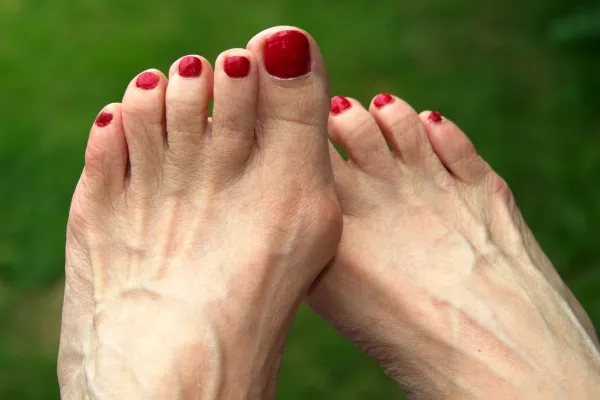
A bunion is a change around the joint at the base of your big toe.
The big toe gradually moves towards the smaller toes, while the joint at its base becomes more prominent. This can create the familiar bump on the inside of the foot.
The medical name is hallux valgus, but we'll happily stick with "bunion" for the rest of this article!
Some bunions cause very little trouble. Others can become painful, rub against shoes or make finding comfortable footwear frustrating.
You may notice:
a bump at the base of your big toe
your big toe leaning towards your other toes
redness or soreness over the joint
pain when walking
difficulty finding comfortable shoes
hard skin or corns where toes rub
stiffness around the big toe joint
Bunions can change gradually, so you may not notice much happening until your shoes start feeling uncomfortable.
Are Bunions Hereditary?
There can certainly be a family connection with bunions.
But you don't simply inherit a bunion in the same way you might inherit eye colour.
What can run in families are characteristics that make a bunion more likely to develop.
These may include your foot shape, joint structure and the way your foot moves when you walk.
So, if several people in your family have bunions, it doesn't mean you're guaranteed to develop one. It may simply mean you have inherited a foot shape or structure that increases your chances.
That's why we sometimes see bunions appearing across several generations of the same family.
You might be able to blame your relatives a little bit – just perhaps not entirely!
Does Foot Shape Matter?
Yes.
We're all built differently, and feet are no exception.
The shape and structure of your foot can affect how pressure travels through it when you stand and walk.
For some people, this can place more stress around the big toe joint.
Over time, the position of the big toe can gradually change.
This is also why two people can wear similar shoes for years and have completely different feet.
One develops a bunion. The other doesn't.
There isn't one single cause that applies to everybody.
So, Do Shoes Cause Bunions?
This is where things get interesting.
Shoes aren't necessarily the sole cause of a bunion, but certain footwear can contribute to the problem and make an existing bunion much more uncomfortable.
Shoes with a narrow or pointed toe area can squeeze the toes together.
If you already have a foot shape that makes you more likely to develop a bunion, regularly wearing tight footwear may put additional pressure around the big toe joint.
High heels can also shift more of your body weight towards the front of the foot.
Again, this doesn't mean wearing heels occasionally automatically gives you bunions.
But if your big toe joint is already changing, footwear that squeezes or places extra pressure on the area may aggravate your symptoms.
Why Does My Bunion Hurt in Some Shoes but Not Others?
Often, it's simply a matter of space and pressure.
Imagine putting a prominent joint into a narrow shoe.
Every time you take a step, the shoe can rub against the bunion. After several hours, that repeated pressure may leave the area red, sore and irritated.
A wider shoe may give the joint more room and reduce that pressure.
That's why people with bunions often tell us:
“It doesn't hurt when I'm barefoot, but it really hurts in my shoes.”
That information can be useful during a podiatry assessment.
Can I Stop a Bunion from Getting Worse?
Unfortunately, there's no simple home treatment that can guarantee a bunion won't progress.
And despite what you might see advertised online, exercises, splints and toe spacers cannot simply make every established bunion disappear.
However, there are sensible things you can do to reduce pressure, improve comfort and look after your feet.
Choose Shoes With Enough Room
Look for shoes with enough width around the toes.
Your toes should have room to sit comfortably rather than being pushed together.
Don't rely only on the size printed inside the shoe. Different brands and styles can fit very differently.
Avoid Shoes That Rub the Bunion
If a particular pair consistently leaves your bunion red and painful, your feet are giving you a fairly clear review of those shoes!
Try another shape or style that gives the joint more room.
Think About Your Activities
The footwear you need for a short meal out may be very different from what you need for a full day of walking.
Choose footwear that suits the activity you're doing.
Don't Ignore Other Areas of Pain
A bunion can change how pressure is distributed through the front of the foot.
Some people begin experiencing discomfort underneath the smaller toes or develop areas of hard skin and corns.
If this happens, it's worth having your feet assessed rather than treating each painful area separately without understanding why it has developed.
Can a Podiatrist Get Rid of a Bunion?
It's important to be clear about this.
A podiatrist cannot simply push an established bunion back into place.
Treatment instead focuses on understanding your symptoms, reducing uncomfortable pressure and helping you manage the problem.
Depending on your individual feet, this might include footwear advice, treating painful corns or hard skin, discussing padding or other pressure-relieving options, or assessing whether another treatment could help.
If a bunion is causing significant problems and conservative treatments aren't helping, surgery may sometimes be considered through an appropriate surgical service.
But having a bunion doesn't automatically mean you need surgery.
Many people manage their symptoms without it.
When Should I See a Podiatrist About My Bunion?
You don't need to wait until your bunion becomes unbearable before asking for advice.
Consider seeing a podiatrist if:
your bunion is regularly painful
finding comfortable footwear is becoming difficult
the joint frequently becomes red or irritated
you're developing corns or hard skin
your big toe appears to be changing position
the pain is affecting your walking or normal activities
you're unsure whether the bump actually is a bunion
Early advice can help you understand what's happening and what you can realistically do about it.
Bunion Assessment at Derriford Therapies in Plymouth
If you're concerned about a bunion, our team at Derriford Therapies in Plymouth can help.
Our HCPC-registered podiatrists can assess your feet, discuss when your symptoms started and look at factors such as your footwear, foot shape and the way your feet are functioning.
We'll explain what we find in straightforward language and discuss suitable options based on your feet and symptoms.
We won't tell you that one particular shoe, insert or exercise magically fixes every bunion.
Feet simply aren't that straightforward.
Our priority is giving you honest advice so you can make an informed decision about your foot health.
Don't Let a Bunion Dictate What You Can Do
So, are bunions hereditary or caused by shoes?
The answer can be a bit of both – with foot shape and how your feet function also playing important roles.
Your family history may make you more likely to develop a bunion, while certain footwear can add pressure and make symptoms worse.
Most importantly, you don't have to wait until your bunion becomes extremely painful before getting advice.
If your bunion is rubbing, aching or making shoe shopping feel like an endurance event, our friendly team at Derriford Therapies in Plymouth is here to help.
Book an appointment online or give our reception team a call to arrange a podiatry assessment.

Ask Derriford Therapies And Their Team
Fill in the form to request a call from our team. One of our team members will call you for FREE and answer any questions or concerns you may have about your condition
Where To Find Derriford Therapies
If you have any questions before scheduling an appointment or for general inquiries, please use the contact us button below. Our team will promptly reach out to assist you.
Opening Hours
Monday: 09.30- 17.30
Tuesday: 09.30- 17.30
Wednesday: 08.30- 17.30
Thursday: 08.30- 17.30
Friday: 08.30- 17.30
Saturday: By appointment only
Sunday: Closed