
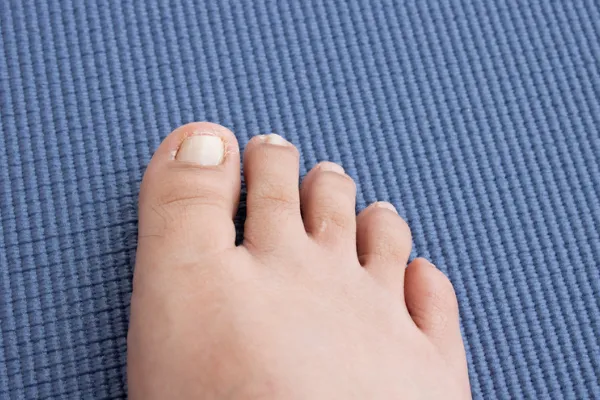
Why Do My Toenails Split? Common Causes and When to Get Them Checked
You take your socks off at the end of the day and notice something strange.
One of your toenails has developed a crack.
Perhaps there's a small split running down the middle.
Maybe the nail is peeling into layers.
Or perhaps a corner keeps breaking off, no matter how carefully you trim it.
Naturally, your first thought is probably:
"What on earth have I done to my toenail?"
You might blame your shoes.
Or wonder whether you've knocked your toe without noticing.
Perhaps you've even searched online and convinced yourself you're missing seventeen different vitamins.
But here's the thing.
Toenails can split for several reasons, and not all of them are serious.
Sometimes the problem is caused by repeated pressure or minor injuries.
Other times, brittle nails, fungal infections or certain health conditions may be involved.
And occasionally, a damaged nail needs professional attention to prevent further problems.
At Derriford Therapies in Plymouth, we regularly help patients understand changes in their toenails and how to look after them safely.
So, let's explore why toenails split, what different types of cracks might mean and when it's time to get them checked.
What Causes Toenails to Split?
Your toenails are made mainly from a tough protein called keratin.
It's the same material found in your fingernails and hair.
Healthy toenails are designed to protect the sensitive skin underneath.
But despite being fairly tough, they aren't indestructible.
Repeated pressure, injury, infection or changes in nail health can make them more likely to crack or split.
You might notice:
A vertical crack running down the nail
A horizontal split across the nail
Layers peeling away
A brittle or crumbly nail edge
A nail that repeatedly breaks
A thickened nail that cracks when trimmed
Part of the nail lifting away from the skin underneath
The appearance of the split can sometimes provide useful clues.
But it's important to remember that you can't always identify the cause of a nail problem just by looking at it.
Let's look at some of the most common explanations.
1. Repeated Pressure From Your Shoes
Let's start with one of the most common suspects.
Your footwear.
Toenails can become damaged when they're repeatedly pressed or rubbed against the inside of your shoes.
This may happen if:
Your shoes are too short.
The toe box is too narrow.
Your feet slide forwards inside your shoes.
You regularly walk downhill.
You spend long periods on your feet.
Your toenails repeatedly hit the front of your footwear.
Over time, this repeated pressure can weaken or damage the nail.
And eventually, it may split.
Why Does This Happen?
Each time your toe presses against the shoe, a small amount of force passes through the nail.
A single incident might not cause a noticeable problem.
But repeated pressure can gradually affect the nail's structure.
If the same toenail keeps splitting, it's worth checking whether your footwear is creating pressure.
And remember, shoes can feel comfortable around your feet while still being too short for your toes.
2. You've Injured Your Toenail Without Realising It
Have you ever stubbed your toe on the furniture?
Or dropped something onto your foot?
Perhaps you've caught your toenail on a sock or knocked it during exercise.
Toenail injuries are surprisingly common.
Sometimes the damage is obvious.
You might experience pain, bruising or bleeding.
But other times, the injury is relatively minor.
And you may not notice a problem until the nail begins growing out.
What Can an Injured Toenail Look Like?
You might notice:
A crack in the nail
A loose section
Discolouration
Thickening
A change in shape
Part of the nail lifting
A nail that grows unevenly
The nail-producing area underneath the skin is called the nail matrix.
If this area is damaged, it can affect how the nail grows.
A toenail that repeatedly splits in the same place may have experienced damage to its nail-growing tissue.
This doesn't always mean the damage is permanent.
But persistent changes are worth assessing.
3. Fungal Nail Infections
A fungal nail infection is another possible cause of splitting toenails.
The medical term is onychomycosis.
Thankfully, you don't need to remember that one.
A fungal infection can affect the structure of the nail.
Over time, the nail may become thicker, more brittle or crumbly.
This can make it more likely to crack.
Signs of a Possible Fungal Nail Infection
You might notice:
Yellow or white discolouration
Thickening
A brittle or crumbly nail edge
Nail lifting
Changes in shape
Debris underneath the nail
Splitting or breaking
However, not every yellow, thickened or damaged nail has a fungal infection.
Repeated injury and other nail conditions can look very similar.
It's important not to assume that a splitting toenail is fungal without an appropriate assessment.
In some cases, a nail sample may be recommended to help confirm the diagnosis before treatment.
For more information, read our related article:
Fungal Nail Treatment in Plymouth: What to Do About Stubborn Toenails
4. Brittle Toenails
Some toenails become dry, fragile or prone to breaking.
This is often described as brittle nails.
You might notice the nail splitting into layers or developing small cracks.
Brittleness can be associated with:
Repeated minor trauma
Nail ageing
Exposure to certain chemicals
Nail products or removers
Skin conditions
Certain medical problems
Sometimes the cause isn't obvious.
What Does a Brittle Nail Look Like?
A brittle nail may:
Peel at the edge
Break easily
Split into thin layers
Feel rough
Develop small cracks
If several toenails have become unusually brittle, especially alongside other symptoms, it may be worth discussing the changes with your GP or podiatrist.
5. Age-Related Nail Changes
Toenails can change as we get older.
They may become thicker, harder or more difficult to trim.
Some also develop ridges or become more brittle.
These changes can make nails more likely to crack, particularly if they're exposed to repeated pressure.
However, ageing isn't the only explanation.
And a new nail change shouldn't automatically be dismissed as normal.
If a toenail suddenly changes shape, colour or texture, it's sensible to have it checked.
Especially if the change affects just one nail.
6. Cutting Your Toenails Incorrectly
Sometimes splitting happens because of how the nail is trimmed.
For example, using blunt nail clippers can place uneven pressure on a thick or brittle nail.
This may cause it to crack.
Trying to remove too much nail at once can also create problems.
And cutting deeply into the corners may increase the risk of an ingrown toenail.
How Should You Trim Your Toenails?
As a general guide:
Use clean, suitable nail clippers.
Trim the nail straight across.
Avoid cutting extremely short.
Don't dig into the corners.
Gently smooth rough edges with a nail file.
Take extra care with thick or brittle nails.
If your toenails are difficult to cut safely, professional nail care may be a better option.
And please don't try to force ordinary scissors through a thick toenail.
Your nail — and your fingers — may not appreciate the experiment.
7. Psoriasis and Other Skin Conditions
Certain skin conditions can affect the nails.
One example is psoriasis.
Psoriasis is an inflammatory condition that can affect the skin and sometimes the nails.
Nail psoriasis may cause:
Small dents in the nail surface
Thickening
Discolouration
Nail lifting
Crumbling
Changes in nail shape
These changes can make the nail more fragile.
Other inflammatory skin conditions can also affect nail growth.
Sometimes nail problems appear alongside visible skin symptoms.
But not always.
If your nails are changing and you also have a history of psoriasis or another skin condition, mention this during your assessment.
It may help identify the cause.
8. Could a Vitamin Deficiency Cause Splitting Toenails?
This is a popular question.
And understandably so.
When something changes in our nails, it's tempting to assume we're missing a vitamin.
Certain nutritional deficiencies can affect nail health.
For example, iron deficiency may sometimes be associated with brittle or unusually shaped nails.
However, most splitting toenails aren't automatically caused by a vitamin deficiency.
Repeated pressure, injury and nail conditions are often more likely explanations.
Taking supplements without knowing whether you need them isn't necessarily helpful.
Some supplements can also interfere with medicines or medical tests.
If several nails have changed and you're experiencing other symptoms, such as unusual tiredness, your GP can advise whether testing is appropriate.
9. A Vertical Split Down the Toenail
A vertical split runs from the tip of the nail towards the base.
Sometimes it's a small crack near the edge.
Other times, it extends further down the nail.
Possible causes include:
Repeated injury
Brittle nails
Changes in the nail-growing tissue
Certain inflammatory nail conditions
If the split is minor and limited to the free edge, it may be possible to carefully smooth the rough area.
However, if the crack extends into the attached part of the nail, don't try to pull or cut it away.
This can cause pain, bleeding or further damage.
A vertical split that repeatedly develops in the same place is worth getting checked.
10. A Horizontal Split Across the Toenail
A horizontal split runs across the width of the nail.
Sometimes this follows an injury.
In other cases, it may be related to a temporary interruption in nail growth.
One possible explanation is a Beau's line.
This is a groove that forms across the nail when nail growth slows or temporarily stops.
It can happen after illness, injury or other significant stress on the body.
As the nail grows, the groove moves forwards.
In some cases, a weakened area may become more likely to split.
If several nails develop horizontal grooves or splits around the same time, discuss this with a healthcare professional.
It may provide useful information about your general health.
11. Why Does My Big Toenail Keep Splitting?
The big toenail is particularly exposed to pressure.
It's larger than the other toenails and can repeatedly contact the front of your shoes.
This is especially common during activities involving:
Long walks
Running
Hiking
Football
Repeated downhill movement
Tight or poorly fitting footwear
Previous injury can also affect how the big toenail grows.
And fungal infections or thickening may make it more vulnerable to cracking.
If your big toenail keeps splitting, the cause may involve a combination of nail damage and repeated pressure.
Changing shoes might help reduce further irritation.
But if the nail-growing area has been damaged, the problem may need professional assessment.
12. Can a Split Toenail Heal Itself?
This is where toenails behave differently from skin.
If you cut your skin, the wound can heal as new tissue forms.
But the visible part of your toenail is made of hardened keratin.
Once that section splits, it doesn't repair itself in the same way.
Instead, the damaged section generally needs to grow out.
How Long Does a Toenail Take to Grow?
Toenails grow slowly.
A big toenail may take around 12–18 months to grow out completely.
Smaller toenails may grow out more quickly.
The exact timing varies with age, health and other factors.
So, if you've damaged your big toenail, patience may be required.
Quite a lot of patience, actually.
A split toenail may improve as healthy new nail grows, but an existing crack won't simply seal itself back together.
If the nail matrix is permanently damaged, the new nail may continue to grow abnormally.
13. Should You Glue a Split Toenail Back Together?
You may have seen online advice suggesting nail glue, superglue or home repair kits.
But these aren't suitable for every type of split.
If the nail is cracked into the attached area, bleeding, painful or showing signs of infection, applying glue or artificial nail products can cause problems.
These products may trap moisture, irritate the skin or make assessment more difficult.
Don't use household glue on a damaged toenail.
If a nail has split significantly, professional advice is safer than trying to repair it yourself.
14. What Should You Do if Your Toenail Splits?
If the split is minor, painless and limited to the free edge of the nail, simple care may be enough.
1. Don't Pull the Split Section Off
Even if it's catching on your socks, avoid tearing it away.
This can extend the crack into the attached nail.
2. Gently Smooth Rough Edges
If safe to do so, use a clean nail file to smooth a small rough edge.
Don't file into painful or attached nail tissue.
3. Protect the Nail From Further Pressure
Choose comfortable shoes with enough room for your toes.
4. Keep the Area Clean
If the surrounding skin is intact, normal foot hygiene is usually sufficient.
If there's broken skin, keep it clean and protected with an appropriate dressing.
5. Avoid Harsh Nail Products
Give the damaged nail a break from products that may cause further irritation.
6. Monitor the Nail as It Grows
Notice whether the split moves forwards with nail growth or repeatedly appears in the same place.
7. Seek Advice if the Nail Is Painful or Loose
If the split extends into the attached nail, causes bleeding or makes the nail unstable, arrange a professional assessment.
The aim is to protect the nail while avoiding further damage.
15. When Should You Get a Splitting Toenail Checked?
Not every small crack requires treatment.
But some nail changes deserve professional attention.
Consider booking a podiatry appointment if:
The same toenail keeps splitting.
Your nail is becoming thick or difficult to cut.
You have a painful crack.
Part of the nail is lifting.
The nail is catching on socks or footwear.
You notice recurring discolouration.
Several nails are becoming unusually brittle.
You suspect a fungal infection.
You're struggling to care for your nails safely.
Warning Signs That Need Prompt Medical Advice
Seek prompt assessment if you notice:
Increasing redness, swelling or warmth
Pus or discharge
Significant pain
Bleeding beneath or around the nail
A nail injury with severe pain
A new dark streak or patch that isn't clearly explained by injury
Pigment spreading onto the surrounding skin
A nail change that continues to worsen
A new or changing dark streak in a nail should be assessed because, although there are several harmless causes, occasionally it can indicate a serious skin condition.
If you have diabetes, poor circulation, reduced sensation or a weakened immune system, seek advice early about damaged nails or broken skin.
Don't ignore a nail that is painful, infected or changing in an unusual way.
Can You Prevent Toenails From Splitting?
You can't prevent every nail problem.
But a few simple habits may help protect your toenails.
Choose Shoes That Fit Properly
Make sure your toes have enough room.
Avoid repeated pressure against the front of your shoes.
Trim Your Nails Carefully
Cut straight across and avoid forcing clippers through thick nails.
Protect Your Toes During Activities
If your work or hobbies put your feet at risk of injury, wear suitable footwear.
Keep Your Feet Clean and Dry
Good foot hygiene can help reduce the risk of certain skin and nail problems.
Avoid Picking at Damaged Nails
Pulling at loose sections can make a small split much worse.
Seek Help With Thick or Difficult Nails
Professional podiatry care can help you manage nails that are hard to trim safely.
Don't Ignore Repeated Changes
If a nail keeps cracking despite sensible care, get it assessed.
Looking after your toenails is about more than keeping them tidy. It's part of looking after your overall foot health.
How Can Derriford Therapies Help With Splitting Toenails in Plymouth?
At Derriford Therapies, we understand that toenail problems can be uncomfortable, frustrating and sometimes a little embarrassing.
Perhaps you've noticed a nail changing shape.
Maybe it keeps splitting when you try to cut it.
Or you're worried that a fungal infection might be involved.
Our HCPC-registered podiatrists can assess your nail health, discuss possible causes and provide appropriate professional nail care.
Depending on your needs, your appointment may include:
Professional Nail Assessment
We'll examine the affected nail and discuss when the changes began.
Safe Nail Care
Where appropriate, we can carefully trim or reduce troublesome nail areas.
Advice About Footwear and Pressure
We'll discuss whether repeated pressure or rubbing may be contributing to the problem.
Guidance About Possible Fungal Infections
If a fungal infection is suspected, we can discuss appropriate testing or treatment options.
Advice About Further Investigation
If the nail changes suggest a skin condition, medical problem or another issue requiring specialist assessment, we'll explain appropriate next steps.
We believe in giving patients clear, honest advice about their foot health.
Because sometimes a splitting toenail is caused by something relatively simple.
And sometimes it's worth investigating further.
Why Choose Derriford Therapies?
We're a friendly, approachable podiatry clinic based in Plymouth, helping patients look after their feet since 2022.
Led by Clinical Director Chelsea Louise Tritschler, our HCPC-registered team believes in professional care, practical advice and making patients feel comfortable.
Our clinic offers:
Bright, modern treatment rooms
Ground-floor access with a disabled access ramp
Convenient free parking nearby
Simple online booking
Friendly reception support
Appointments tailored to your individual needs
Whether you're dealing with splitting toenails, thickened nails or another foot health concern, we're here to help.
And please don't feel embarrassed if your toenails aren't looking their best.
We promise we've seen plenty of nails that have had a rather difficult relationship with shoes!
Don't Ignore a Toenail That Keeps Splitting
A splitting toenail might seem like a small problem.
And sometimes it is.
But if the same nail keeps cracking, changing shape or becoming painful, there may be an underlying reason.
It could be repeated pressure.
A previous injury.
A fungal infection.
Or a change in how the nail grows.
The important thing is understanding what's causing the problem rather than repeatedly trimming away the damaged section.
If you're concerned about a splitting toenail, our friendly team at Derriford Therapies in Plymouth can help you understand your foot health and discuss appropriate care.
Book a podiatry appointment online or give our reception team a call if your toenails are causing discomfort or concern.
Because your toenails should protect your toes.
Not become the reason you're having an argument with your socks every morning.
Derriford Therapies — helping Plymouth put its best foot forward.